
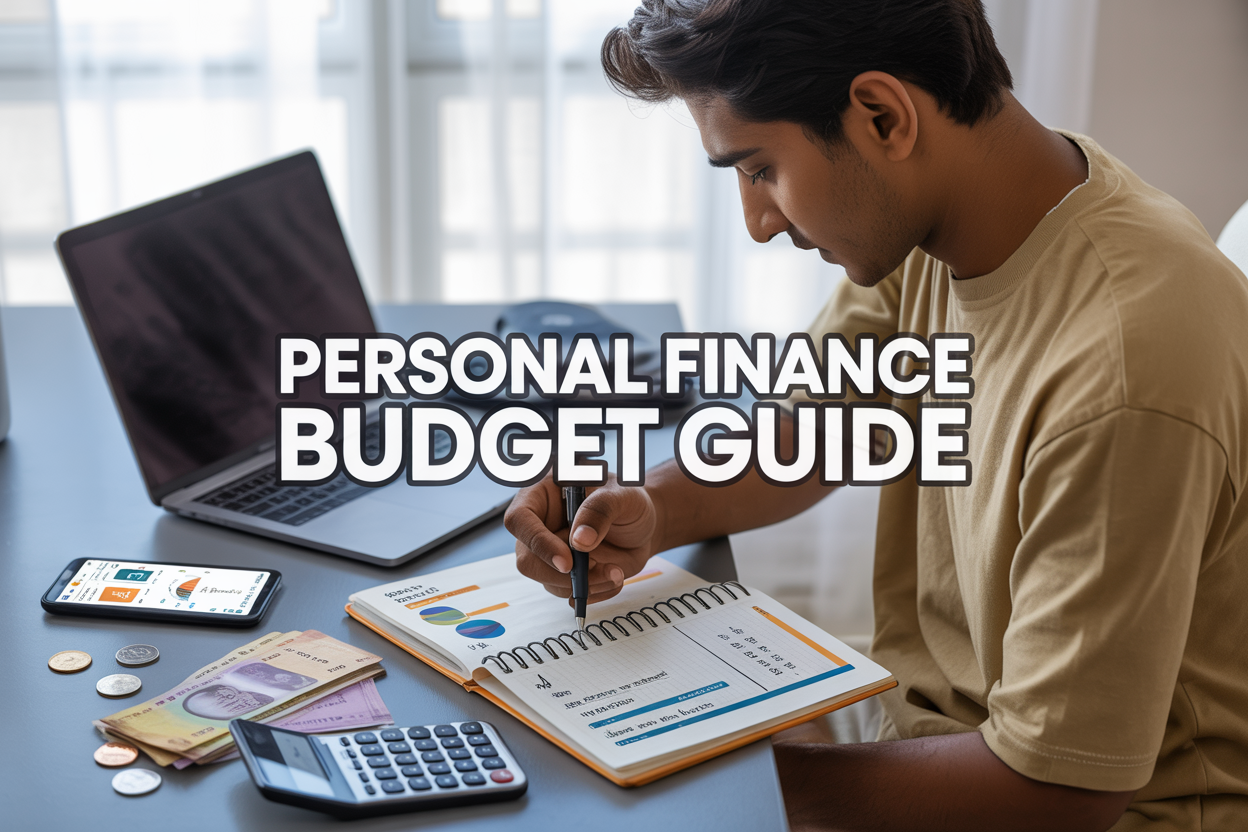
A budget in personal finance is basically a plan for your money – it shows where your income comes from and where it goes each month. For beginners in India, creating your first budget can feel overwhelming, but it’s one of the most important steps toward financial stability.
This guide is designed for anyone starting their financial journey in India, whether you’re a fresh graduate earning your first salary, managing a household budget, or simply looking to take control of your spending. You don’t need any prior financial experience – just the willingness to learn and start organizing your money better.
Throughout this guide, we’ll walk you through how to create your first budget with simple, practical steps that work for Indian families and lifestyles. We’ll also cover budgeting strategies India-specific considerations like managing irregular income, planning for festivals, and incorporating traditional savings habits into modern budget planning. Finally, we’ll explore the best budget management tools India has to offer, from mobile apps to simple spreadsheet methods, so you can track your progress and stay on course.
By the end, you’ll have a clear roadmap to build a budget that actually works for your life and helps you reach your financial goals.
Understanding Budget Basics in Personal Finance

Definition and Core Purpose of Budgeting
A personal finance budget India serves as the fundamental framework for managing your money effectively. Budgeting is essentially the process of creating a plan for how you’ll spend your income over a specific period. The core purpose of budgeting lies in ensuring that your income is allocated strategically across different categories of expenses while maintaining financial stability and working towards your long-term objectives.
What is budget in personal finance can be understood as a roadmap that helps you track where your money comes from and where it goes. This systematic approach prevents overspending and ensures that essential expenses are covered while still allowing room for savings and investments. The primary goal is to achieve a balanced financial life where your expenses don’t exceed your income.
Key Components of Income Estimation and Expense Categorization
Effective budgeting for beginners India starts with two critical components: accurately estimating your income and properly categorizing your expenses. Your total income forms the foundation of your budget, and from this amount, you need to allocate funds strategically.
The popular 50-30-20 budgeting method provides an excellent framework for expense categorization. According to this approach, your income should be divided into three main categories:
- 50% for essential needs: This includes basic living expenses such as groceries, rent, utilities, EMIs, and insurance premiums
- 30% for wants: Discretionary spending on entertainment, dining out, hobbies, and travel
- 20% for savings and investments: This portion covers mutual funds, fixed deposits, Provident Fund contributions, and emergency fund creation
Difference Between Fixed and Variable Expenses
Understanding the distinction between fixed and variable expenses is crucial for effective budget planning India. Fixed expenses remain constant each month and include items like rent, insurance premiums, loan EMIs, and subscription services. These expenses are predictable and form the backbone of your essential needs category.
Variable expenses, on the other hand, fluctuate from month to month. These include groceries, utilities, entertainment, and discretionary purchases. The reference content suggests that if you find 50% isn’t sufficient for your needs, you should assess whether you’re buying more groceries than you consume or splurging on non-essential items within your variable expense categories.
Role of Budgeting in Achieving Financial Goals
Now that we have covered the basic components, it’s important to understand how budgeting directly contributes to achieving your financial objectives. The 20% allocation for savings and investments is perhaps the most critical aspect, as it focuses on building financial security for the future.
Budgeting serves as an effective tool for long-term wealth creation through systematic savings and investments. By consistently allocating funds toward mutual funds, fixed deposits, and retirement plans, you build stability and prepare for both expected milestones like retirement and unexpected financial challenges.
The reference content emphasizes that this budgeting ratio isn’t set in stone and can be adjusted based on individual needs. For instance, you might choose to allocate 30% to savings and investments while reducing discretionary spending to 20%, depending on your financial goals and life stage.
Essential Steps to Create Your First Budget

Calculating Total Income from All Sources
Now that we understand the fundamental concepts of budgeting, the first crucial step in creating your first budget is accurately calculating your total income. This involves identifying and documenting all revenue streams that contribute to your monthly cash flow.
Start by listing your primary income source, which is typically your salary or wages from employment. Include your take-home pay after deductions for taxes, provident fund, and other statutory contributions. For salaried individuals in India, this would be your net salary credited to your bank account each month.
Beyond your primary income, identify secondary income sources such as rental income from properties, dividends from investments, interest from fixed deposits or savings accounts, freelance work earnings, or any side business income. Don’t overlook irregular income sources like annual bonuses, festival allowances, or occasional consulting fees, but calculate their monthly average over the year for budgeting purposes.
For those with variable income streams, calculate a conservative monthly average based on the past 6-12 months of earnings. This approach ensures your budget remains realistic and achievable even during lower-income periods.
Document all income sources with their respective amounts, frequency of receipt, and reliability. This comprehensive income assessment forms the foundation upon which all other budgeting decisions will be built, ensuring you have a clear picture of your financial resources before allocating them across different expense categories.
Listing and Categorizing Monthly Expenses
With your total income calculated, the next essential step involves systematically listing and categorizing all your monthly expenses. This process requires careful attention to detail and honest assessment of your spending patterns.
Begin by reviewing your bank statements, credit card bills, and receipts from the past 3-6 months to identify recurring expenses. Create broad categories that reflect typical Indian household spending patterns: housing (rent, EMIs, maintenance), utilities (electricity, water, gas, internet, mobile), transportation (fuel, public transport, vehicle maintenance), groceries and food, healthcare, education, insurance premiums, and personal care.
Within each category, list specific expenses with their amounts. For housing, include rent or home loan EMI, society maintenance charges, property taxes, and home insurance. Transportation expenses should cover fuel costs, vehicle insurance, servicing, and public transport expenses. Food expenses encompass groceries, dining out, and food delivery charges.
Don’t forget discretionary expenses such as entertainment, shopping, subscriptions to streaming services, gym memberships, and social outings. These often constitute a significant portion of monthly spending and require careful tracking for effective budget management.
Create separate categories for irregular but predictable expenses like annual insurance premiums, festival expenses, or vacation costs. Calculate their monthly impact by dividing annual amounts by twelve, ensuring these expenses don’t derail your budget when they occur.
Setting Realistic Spending Limits for Each Category
Previously, we’ve identified and categorized all income sources and expenses. With this foundation, setting realistic spending limits for each category becomes the critical next step in budget creation. This process requires balancing your financial goals with practical spending needs.
Apply the popular budgeting principle of allocating your income across needs, wants, and savings. Typically, essential expenses like housing, utilities, groceries, and transportation should not exceed 50-60% of your total income. Housing costs, including rent or EMI, should ideally stay within 30-40% of your monthly income to maintain financial stability.
For discretionary spending categories like entertainment, dining out, and shopping, set limits based on your remaining income after covering essentials and savings goals. A practical approach is to allocate 20-30% of income to wants and lifestyle expenses, ensuring you maintain quality of life while staying within means.
Consider seasonal variations when setting limits. Festival months typically require higher spending on gifts, travel, and celebrations, so adjust monthly limits accordingly. Similarly, account for annual expenses like insurance renewals, school fees, or vacation costs by setting aside monthly amounts.
Review and adjust these limits based on your spending patterns from previous months. If you consistently overspend in certain categories, either increase the allocation by reducing spending elsewhere or identify specific areas for cost reduction. The key is creating limits that are challenging enough to encourage financial discipline but realistic enough to be sustainable long-term.
Creating Emergency Fund Allocations
With spending limits established across categories, creating emergency fund allocations represents a non-negotiable component of your first budget. This financial safety net protects against unexpected expenses and income disruptions that could otherwise derail your financial stability.
Financial experts recommend building an emergency fund equivalent to 6-12 months of essential living expenses. However, for beginners, start with a more achievable goal of accumulating one month’s expenses, then gradually build toward the larger target. Calculate your essential monthly expenses including housing, utilities, groceries, transportation, and minimum debt payments to determine your emergency fund target.
Treat emergency fund contributions as a fixed expense, similar to rent or loan EMIs, by allocating a specific percentage of your monthly income toward this goal. Even setting aside 10-15% of your income monthly can help build a substantial emergency fund over time. Automate this transfer to a separate savings account to ensure consistency and avoid the temptation to skip contributions.
Choose liquid investment options for emergency funds such as high-yield savings accounts, liquid mutual funds, or short-term fixed deposits. The priority is accessibility and capital preservation rather than high returns, as you need immediate access during genuine emergencies.
Clearly define what constitutes an emergency – job loss, medical expenses, urgent home repairs, or family emergencies – versus regular expenses or discretionary purchases. This clarity prevents misuse of emergency funds for non-urgent situations, maintaining the fund’s integrity for true financial emergencies.
Indian Context Considerations for Budgeting

Income Sources Specific to India
When creating a personal finance budget India, understanding the diverse income streams available to Indian households is crucial for effective budget planning India. Unlike Western economies where salary income predominates, Indian families often juggle multiple income sources simultaneously.
Salary income remains the primary source for most urban Indian households, typically ranging from ₹30,000 to ₹60,000 per month for middle-class families. This provides the stable foundation for budgeting calculations, as demonstrated in practical examples where monthly paychecks of ₹40,000-₹50,000 serve as baseline income for budget allocation.
Business income presents unique challenges for budgeting for beginners India, as it fluctuates significantly. Many Indian families combine salaried employment with small business ventures, requiring flexible budget management approaches to accommodate irregular cash flows.
Investment returns from various instruments contribute substantially to household income, particularly for established families. These returns complement primary income streams and require careful integration into monthly budget calculations.
Cultural Financial Priorities
Now that we have covered income sources, let’s examine the distinctive cultural priorities that shape Indian budgeting strategies. Indian families prioritize specific financial goals that differ markedly from global patterns.
Education expenses consistently rank as the top priority, with families often allocating 15-20% of their income toward children’s schooling and higher education. This cultural emphasis requires dedicated budget categories and long-term planning.
Marriage-related expenses represent another significant cultural consideration, with families systematically saving substantial amounts over years. These expenses often require separate envelope systems or dedicated savings accounts.
Retirement planning reflects the joint family system’s influence, where multiple generations depend on collective financial security. This cultural context shapes how families approach their savings allocation within the 50/30/20 budgeting rule.
Popular Investment Instruments
With this cultural context in mind, next, we’ll explore the investment instruments that Indian families commonly integrate into their budget management strategies. The reference content highlights several popular options that feature prominently in Indian household budgeting.
Mutual funds have gained tremendous popularity, offering systematic investment plans (SIPs) that align perfectly with monthly budgeting cycles. Families typically allocate ₹5,000-₹8,000 monthly toward mutual fund investments as part of their 20% savings allocation.
Fixed deposits remain a cornerstone of Indian investment strategy, providing guaranteed returns that complement riskier investments. The predictable nature of FD returns makes them ideal for conservative budget planning approaches.
Gold investments hold special cultural significance in India, serving both as investment and cultural necessity. Many families incorporate gold purchases into their annual budgeting cycles, particularly around festivals and weddings.
Managing Seasonal Income Variations
Previously, I’ve discussed stable income sources, but many Indian households face significant seasonal variations that require specialized budgeting approaches. This challenge particularly affects agricultural families, small business owners, and those dependent on seasonal employment.
The envelope cash system proves particularly effective for managing irregular income patterns. Families can stuff envelopes with larger amounts during peak earning periods and gradually draw from them during lean months.
Reverse budgeting strategies work exceptionally well for seasonal income management, where families prioritize savings goals during high-income periods and adjust living expenses accordingly. For example, a family earning ₹200,000 during peak season might immediately allocate ₹33,000 monthly toward their five-year savings mission of ₹200,000.
Zero-based budgeting adapts well to seasonal variations by ensuring every rupee has a designated purpose, whether for immediate expenses or future month provisions. This approach helps families maintain financial stability regardless of income fluctuations.
The pay yourself first principle becomes even more critical for seasonal earners, requiring disciplined savings during prosperous periods to sustain family needs during slower months.
Tools and Methods for Budget Management

Digital apps and budgeting software options
Previously, we’ve established the importance of understanding budget basics, and now it’s time to explore modern digital solutions that can transform your budget management experience. The Indian market offers numerous sophisticated budgeting apps designed specifically for local financial needs and digital payment systems.
Top-rated budgeting applications like Moneyview Money Manager App stand out by automatically reading transactional SMS messages and providing real-time financial visibility without manual data entry. This app categorizes payments, shows major spending areas, and offers personalized bill-paying reminders with spending trend analysis.
For comprehensive budget management, ET Money serves as one of the top personal finance apps in India, supporting eight Indian languages and providing intelligent voice search capabilities. It offers free credit rating computation and allows users to track expenses while investing in mutual funds and tax-saving schemes.
Goodbudget excels in proactive budget planning with its envelope-style approach, featuring automatic data backup, intelligent payee suggestions, and cross-device synchronization. The app includes spending analysis reports and income versus spending tracking to maintain clear cash flow visibility.
Other notable options include Money Manager Expense & Budget App from Realbyte, offering double-entry bookkeeping systems and immediate statistics access, and Monefy, which provides intuitive interfaces with multi-currency support and chart-style spending distribution visualization.
Modern features to prioritize include UPI and SMS integration for automatic expense tracking, multi-bank account linking, customizable spending categories, credit card usage alerts, and robust data privacy protection with encryption.
Traditional spreadsheet methods
For those preferring manual control over their budget management tools India offers, traditional spreadsheet methods remain highly effective and cost-efficient solutions. Many financial experts still recommend spreadsheet-based budgeting for individuals who want complete customization and detailed tracking capabilities.
Excel and Google Sheets advantages include unlimited customization options, complex formula capabilities for advanced calculations, and the ability to create personalized categories that match your specific spending patterns. Unlike apps, spreadsheets don’t require internet connectivity for basic functionality and offer complete data ownership without privacy concerns.
Creating effective budget spreadsheets involves establishing clear income and expense categories, implementing automatic calculation formulas, and designing visual charts for spending analysis. You can create monthly budget templates with built-in calculators for loan payments, EMI tracking, and savings goal monitoring.
The main benefit lies in complete control over data presentation – you can design layouts that match your thinking process, add custom fields for Indian-specific expenses like festival spending or family support, and integrate multiple accounts without subscription fees.
However, spreadsheets require more time investment for setup and maintenance compared to automated apps, and they lack real-time SMS integration features that modern Indian consumers expect for tracking digital payments.
Working with financial advisors
Now that we have covered digital and traditional self-managed approaches, working with professional financial advisors adds expert guidance to your budget management strategy. Financial advisors can provide personalized budgeting frameworks that align with your specific income patterns, family obligations, and long-term financial goals.
Professional advisor benefits include customized budget allocation recommendations based on your risk profile, assistance with complex financial decisions like loan management and investment integration, and ongoing monitoring of your financial progress with regular reviews and adjustments.
Advisors familiar with Indian financial contexts understand local factors like family financial responsibilities, festival-related expenses, tax-saving requirements, and cultural spending patterns that generic budgeting tools might overlook. They can help integrate traditional savings methods with modern digital tracking systems.
Advisor selection criteria should include certifications from recognized financial institutions, experience with clients in similar income brackets, and familiarity with digital budgeting tools to complement their traditional advisory services.
The combination of professional guidance with digital budget management tools creates a comprehensive approach where advisors help establish the framework while apps handle day-to-day tracking and monitoring.
Regular monitoring and tracking systems
With the foundation of appropriate tools established, implementing consistent monitoring and tracking systems becomes crucial for budget management success. Regular tracking ensures your budget remains aligned with actual spending patterns and financial goals throughout changing circumstances.
Daily tracking habits involve checking app notifications for spending alerts, reviewing major transactions, and ensuring all expenses are properly categorized. The best budgeting apps India offers provide real-time updates that make daily monitoring effortless through SMS integration and automatic bank synchronization.
Weekly review processes should include analyzing spending patterns by category, identifying any budget overruns, and adjusting upcoming week’s planned expenses accordingly. Apps like Walnut and ET Money provide weekly reports that highlight spending trends and suggest corrective actions.
Monthly comprehensive analysis involves reviewing overall budget performance, comparing actual versus planned expenses, evaluating progress toward savings goals, and making necessary adjustments for the following month. This includes assessing whether your chosen budget management tools are meeting your tracking needs effectively.
Tracking system optimization requires regularly updating spending categories to match evolving lifestyle needs, adjusting budget allocations based on income changes, and ensuring your monitoring frequency matches your financial complexity level. Successful budget tracking combines automated data collection through apps with conscious spending awareness through regular review habits.
Benefits of Consistent Budget Planning

Improved Financial Stability and Reduced Stress
Now that we have covered the foundational aspects of budgeting, let’s explore how consistent budget planning transforms your financial well-being. A well-maintained budget creates a solid foundation for financial stability by ensuring your spending never exceeds your income. When you track expenses and follow a structured plan, you gain the confidence that comes from knowing exactly where your money goes each month.
This financial clarity significantly reduces money-related stress and anxiety. By having a clear picture of your financial situation and a concrete plan in place, you eliminate the uncertainty that often leads to sleepless nights worrying about bills or unexpected expenses. The peace of mind that comes from knowing you can handle your financial obligations creates a positive impact on your overall quality of life.
Better Control Over Spending Habits
Previously, many people struggle with understanding where their money disappears each month. Consistent budget planning forces you to take a close look at your spending habits and reveals patterns you might not have noticed before. When reviewing your expenses, you may discover that you’re spending money on things you don’t actually need, such as multiple subscription services or excessive dining out.
This awareness allows you to rethink your spending habits and refocus your financial priorities. Budgeting helps you distinguish between needs and wants, enabling you to make more intentional purchasing decisions. By categorizing your expenses and setting limits for discretionary spending, you develop the discipline to avoid impulse purchases and lifestyle creep that can derail your financial progress.
Enhanced Ability to Build Wealth Over Time
With this in mind, consistent budget planning serves as your roadmap for wealth accumulation. By building regular savings and investment contributions into your budget, you create a systematic approach to growing your money over time. Setting aside a portion of your earnings each month for retirement accounts, mutual funds, or other investment vehicles helps you build a substantial nest egg.
A budget ensures that wealth-building becomes a priority rather than an afterthought. Instead of saving whatever is left over at the end of the month, you treat savings as a non-negotiable expense, paying yourself first. This disciplined approach, even if it requires some sacrifice in the short term, compounds over time to create significant financial growth and helps you achieve long-term financial goals like comfortable retirement or financial independence.
Preparation for Financial Emergencies
Life is filled with unexpected surprises that can create serious financial turmoil – job loss, medical emergencies, major home repairs, or family crises. Consistent budget planning helps you prepare for these situations by incorporating an emergency fund into your financial strategy. An emergency fund should consist of at least three to six months’ worth of living expenses, and it should be accounted for when budgeting.
Building this safety net doesn’t happen overnight, but a well-structured budget makes it achievable. Even setting aside a modest amount each week gradually builds your emergency fund. This preparation ensures that you don’t need to rely on credit cards or dip into long-term savings when unexpected expenses arise, protecting your overall financial stability and keeping you on track toward your larger financial objectives.
Common Budgeting Challenges and Solutions

Dealing with irregular income patterns
Managing a personal finance budget in India becomes particularly challenging when your income varies from month to month. Whether you’re a freelancer, business owner, or work in sales with variable commissions, irregular income patterns require a different budgeting approach than traditional salary-based planning.
Start by calculating your average monthly income over the past 6-12 months to establish a baseline. Create a bare-bones budget that covers only essential expenses like rent, utilities, groceries, and loan EMIs. This ensures you can survive even during low-income months. When you have higher-earning months, resist the temptation to increase lifestyle spending immediately. Instead, build a buffer fund specifically for income fluctuations.
Consider implementing the cash payment system to limit overspending during good months. This helps maintain financial discipline and prevents you from relying on credit cards when income dips unexpectedly.
Managing unexpected expenses
Unexpected expenses are perhaps the biggest threat to any budgeting plan in India. Medical emergencies, vehicle repairs, or sudden job loss can completely derail your financial stability if you’re not prepared.
Building an emergency fund is crucial for handling these situations. Financial experts recommend maintaining 3-6 months of living expenses in a high-interest savings account. Start small by automating even ₹1,000-2,000 monthly transfers to this fund until you reach your target.
When unexpected expenses do occur, avoid panic decisions. Assess whether the expense is truly urgent or if it can be delayed. For genuine emergencies, prioritize using your emergency fund rather than taking high-interest personal loans or maxing out credit cards. If the emergency fund isn’t sufficient, consider negotiating payment plans with service providers or exploring low-interest loan options.
Staying motivated with budget discipline
Maintaining budget discipline over time requires both psychological strategies and practical techniques. The key is making budgeting a habit rather than a burden.
Track your progress visually by noting down every rupee spent and categorizing expenses into essentials and non-essentials. Many people find success with the cash envelope method where you allocate physical cash for different spending categories. This makes spending more tangible and helps prevent overspending.
Set small, achievable milestones rather than overwhelming long-term goals. For instance, instead of aiming to save ₹100,000 in a year, focus on saving ₹8,000-10,000 monthly. Celebrate these small wins to maintain motivation.
Consider joining online communities or finding an accountability partner who shares similar financial goals. Sharing your budgeting journey with others provides moral support during challenging times and keeps you committed to your financial objectives.
Adjusting budgets for life changes
Life rarely follows a linear path, and your budgeting strategies must be flexible enough to accommodate major life changes. Whether it’s marriage, parenthood, job changes, or retirement planning, each phase requires budget adjustments.
When facing significant life transitions, reassess your priorities and spending categories. A new parent might need to allocate more funds for childcare and reduce entertainment expenses. Someone starting a business might need to cut personal expenses temporarily to fund their venture.
Create separate budget categories for life transition periods. For example, if you’re planning to buy a home, start a dedicated savings category for the down payment well in advance. This prevents the goal from disrupting your regular budget operations.
Review and update your budget quarterly rather than annually. This ensures you can adapt to changes quickly rather than struggling with an outdated financial plan. Remember, a budget should serve as a tool to help you achieve your goals, not a rigid constraint that causes stress when circumstances change.
Advanced Budget Strategies for Long-term Success

Investment Planning Within Your Budget
Now that we have covered the foundational budgeting concepts, it’s crucial to understand how investment planning integrates seamlessly into your personal finance budget. For high earners and serious wealth builders in India, the standard 20% savings allocation should be modified to 25-35% to accelerate long-term financial success.
When incorporating investments into your budget, follow this priority hierarchy:
- Emergency fund covering 3-6 months of expenses (12 months for high earners)
- Employer PF match – maximize any employer matching contributions
- PPF contributions up to the annual limit of ₹1.5 lakh
- ELSS mutual funds for tax-saving under Section 80C
- Equity mutual funds through SIPs for long-term wealth creation
- Direct equity investments for experienced investors
The key principle is treating variable income sources like bonuses or business profits as pure wealth-building opportunities rather than lifestyle funding. Budget all fixed expenses based on your predictable base income only, then channel any additional earnings directly into investment accounts.
Tax-Efficient Savings Approaches
With this investment foundation in place, optimizing for tax efficiency becomes paramount in the Indian context. High earners face progressive tax brackets of up to 30% plus cess, making tax-efficient budgeting crucial for wealth preservation.
Key tax optimization strategies for your budget include:
- Maximize Section 80C deductions: Allocate ₹1.5 lakh annually across PPF, ELSS, life insurance premiums, and home loan principal
- Utilize Section 80D: Budget for health insurance premiums up to ₹25,000 for self and family, plus ₹50,000 for senior citizen parents
- Leverage HRA exemptions: If you’re a salaried employee paying rent, ensure optimal HRA claims
- Plan charitable donations: Budget for Section 80G donations to reduce tax liability while supporting causes
For professionals with irregular income streams, implement systematic tax planning by setting aside 30-40% of bonus income for tax obligations immediately. This prevents year-end tax shocks and ensures smooth cash flow management.
Goal-Based Financial Planning
Previously, I’ve emphasized the importance of aligning spending with values, and goal-based budgeting takes this principle further. Rather than generic savings categories, structure your budget around specific, time-bound financial objectives.
Short-term goals (1-3 years):
- Emergency fund completion
- Home down payment
- Vehicle purchase
- Wedding expenses
Medium-term goals (3-10 years):
- Children’s education planning
- Home loan prepayment
- International vacation fund
Long-term goals (10+ years):
- Retirement corpus building
- Children’s higher education abroad
- Wealth legacy creation
Allocate specific monthly amounts to each goal within your 25-35% savings allocation. This targeted approach prevents money from sitting idle in low-yield savings accounts and ensures every rupee serves a purpose.
Regular Budget Review and Optimization Techniques
With these advanced strategies in place, maintaining momentum requires systematic review and optimization. Schedule quarterly budget audits to assess progress and make necessary adjustments.
Monthly review checklist:
- Track actual vs. budgeted expenses across all categories
- Evaluate investment performance and rebalancing needs
- Assess goal progress and timeline adjustments
- Identify subscription creep or lifestyle inflation patterns
Quarterly optimization activities:
- Review and increase SIP amounts based on income growth
- Rebalance investment portfolios according to target allocation
- Evaluate tax-saving opportunities for the remaining financial year
- Update emergency fund requirements based on lifestyle changes
Annual strategic review:
- Comprehensive goal reassessment and priority realignment
- Insurance coverage evaluation and updates
- Estate planning document reviews
- Professional financial planning consultation for complex situations
The key to long-term budgeting success lies in automation and systematic increases. Implement the “50% rule” where half of any salary increment automatically goes toward increased savings and investments, preventing lifestyle inflation from eroding wealth-building potential.

A well-structured budget serves as your financial compass, guiding you toward stability, reduced stress, and long-term wealth building. From understanding the basics of income estimation and expense categorization to implementing advanced strategies for sustained success, budgeting in the Indian context requires careful consideration of diverse income sources, savings goals, and investment opportunities. Whether you’re tracking monthly expenses through apps or spreadsheets, the key lies in regular monitoring and adjustment of your financial plan.
Take the first step today by calculating your total income, listing your expenses, and setting realistic spending limits for each category. Remember that budgeting is not about restricting yourself but about gaining control over your financial future. With consistent effort and the right tools, you can transform your relationship with money, plan for emergencies, and work steadily toward financial independence. Your journey to better financial health begins with that very first budget you create.