Debt isn’t always the enemy many Indians think it is. For anyone managing personal finances in India – from young professionals to experienced investors – knowing the difference between good debt vs. bad debt can transform your financial future.
This guide is for Indians who want to make smarter borrowing decisions and use debt as a tool for wealth building rather than a financial burden. You’ll learn practical strategies that can help you avoid common debt traps while maximizing opportunities for financial growth.
We’ll break down the fundamentals of debt in simple terms, showing you exactly what makes debt “good” and how it can actually build your wealth over time. You’ll also discover the warning signs of bad debt and learn proven strategies for smart borrowing that work specifically in the Indian financial landscape.
Understanding the Fundamentals of Debt

What Debt Really Means and How It Works
Debt is money borrowed with an agreement to repay it over time, usually with added interest. This fundamental financial tool operates on a simple premise: a lender provides funds to a borrower, who commits to returning the principal amount along with predetermined interest charges according to specified terms and conditions.
Individuals and businesses take on debt for various reasons, such as buying a home, starting a business, or covering emergencies. The borrowing process creates a contractual obligation that establishes clear repayment schedules, interest rates, and consequences for non-payment. Understanding the terms and nature of debt is crucial for making informed financial decisions, as these agreements can significantly impact your financial future.
Unless forgiven by the lender, the debt must be repaid in full according to the agreed-upon terms. This obligation remains binding regardless of changes in personal circumstances, making it essential to carefully evaluate your ability to meet repayment requirements before borrowing.
Why Not All Debt Should Be Feared
Debt is not inherently negative, and not all debts are created equal. This fundamental understanding can transform how you approach borrowing and financial planning. Understanding the difference between good and bad debt can greatly affect how you manage finances and make borrowing decisions.
Some forms of borrowing can create wealth while others pose a stealth risk to financial health. The key lies in recognizing that certain types of debt serve as financial tools that can enhance your economic position, while others merely drain resources without providing lasting value.
Smart debt can accelerate financial growth, generate opportunities, and build credit when used strategically. Rather than avoiding all forms of borrowing, successful financial management involves learning to distinguish between beneficial and detrimental debt arrangements.
The Role of Debt in Financial Growth
The essential thing is to determine if the debt helps to reach your goals or is simply for short-term gain. This evaluation process requires careful consideration of how borrowed funds will be utilized and what returns they might generate over time.
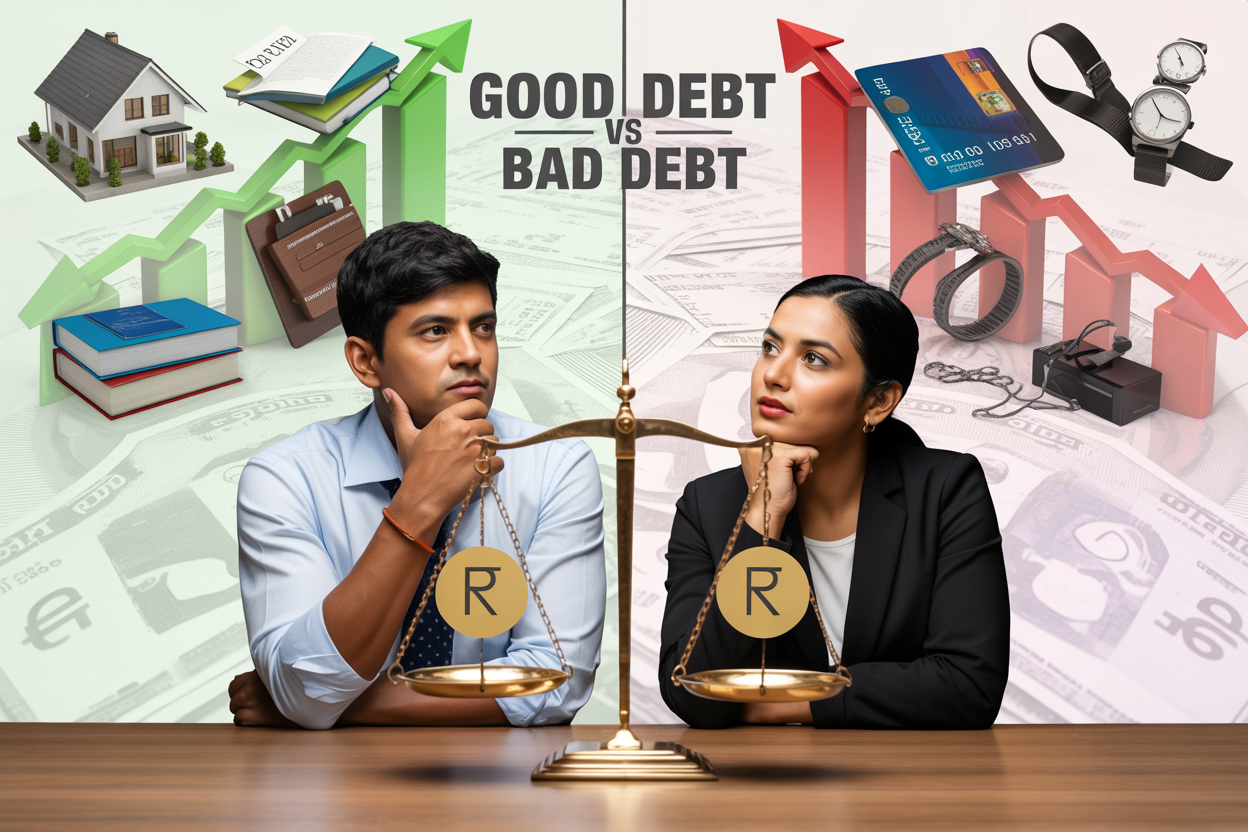
Good debt helps build assets or income, while bad debt drains your finances. When debt is used to acquire appreciating assets, fund education that increases earning potential, or invest in income-generating opportunities, it can serve as a catalyst for wealth building. Conversely, borrowing for consumption or depreciating assets typically creates financial burdens without corresponding benefits.
With this foundational understanding of debt’s dual nature, you can begin to make strategic decisions about when and how to borrow, setting the stage for building wealth rather than simply accumulating financial obligations.
Good Debt: Your Path to Wealth Building

Definition and Characteristics of Good Debt
Good debt refers to borrowings that help you build assets or generate income in the long term, contributing to financial growth. This type of debt serves as an investment that provides value and enhances your positive future financial health. The fundamental characteristic of good debt lies in its ability to facilitate wealth creation rather than merely fulfilling immediate consumption needs.
Key characteristics that distinguish good debt include:
- Reasonable interest rates that don’t burden your financial capacity
- Tax deduction benefits on interest payments, reducing your overall tax liability
- Credit history enhancement when payments are made consistently on time
- Asset building potential that increases your net worth over time
- Income generation capability that can help service the debt itself
Home Loans as Investment Opportunities
Purchasing a house with a home loan is often seen as a strategic investment, especially if the property appreciates over time. Real estate has historically been one of the most reliable wealth-building instruments in India, making home loans a prime example of good debt.
Home loans in India come with significant tax benefits under sections 80C and 24(b) of the Income Tax Act. Under Section 80C, you can claim deductions up to ₹1.5 lakh for principal repayments, while Section 24(b) allows deductions up to ₹2 lakh for interest payments on home loans. These tax advantages effectively reduce the cost of borrowing while you build equity in a tangible asset.
Education Loans for Career Enhancement
An education loan qualifies as good debt because it enhances skills, leading to better job opportunities and higher future income potential. The investment in education typically yields returns through improved earning capacity throughout your career.
In India, education loans qualify for tax deductions under Section 80E, where the entire interest amount paid can be claimed as a deduction for up to eight years. This makes education loans not only an investment in human capital but also provides immediate tax relief, making them doubly beneficial.
Business Loans for Income Generation
Entrepreneurs strategically use business loans to expand their operations and increase profitability. If the borrowed amount successfully increases business profitability, it qualifies as exemplary good debt. These loans serve the specific purpose of creating or expanding ventures that generate sustainable profit streams.
Business loans enable entrepreneurs to:
- Scale operations efficiently
- Invest in revenue-generating equipment or inventory
- Expand market reach
- Improve operational capabilities
Investment-Focused Borrowing Strategies
Borrowing to invest in assets that grow in value, such as real estate or stock investments, can be considered good debt, provided it’s a calculated and informed decision. This strategy leverages borrowed capital to acquire appreciating assets that can generate returns exceeding the cost of borrowing.
However, investment-focused borrowing requires:
- Thorough market analysis before making investment decisions
- Risk assessment to ensure the investment can service the debt
- Diversification strategies to minimize potential losses
- Professional guidance for complex investment instruments
Bad Debt: Financial Drains to Avoid

Understanding Bad Debt and Its Dangers
Bad debt represents borrowing that fails to generate future income or value, typically involving depreciating assets or spending without long-term benefits. Unlike good debt, which can enhance your financial position over time, bad debt becomes a financial drain that can lead to serious consequences.
The primary danger of bad debt lies in its ability to create financial stress and trap borrowers in cycles of high interest payments. This type of debt typically carries no financial returns while imposing high interest rates that compound over time. When managed poorly, bad debt doesn’t produce any cash flow and can quickly spiral into further borrowing, creating a vicious cycle that negatively affects your credit score and overall financial health.
Credit Card Debt for Non-Essential Purchases
Using credit cards for non-essential purchases such as luxury goods or vacations represents one of the most common forms of bad debt in India. When these purchases aren’t managed well, they quickly transform into financial burdens that can persist for years.
Credit cards typically carry high-interest rates, often ranging from 24% to 48% annually in India. This means that if you carry a balance on your card, the debt can quickly spiral out of control. What might seem like a small purchase today can balloon into a significant financial obligation when interest compounds month after month. The convenience of credit cards often masks the true cost of borrowing, making it easy to accumulate debt without realizing the long-term financial impact.
Personal Loans for Lifestyle Expenses
Borrowing through personal loans to fund vacations, weddings, or lifestyle upgrades without a comprehensive repayment plan exemplifies another dangerous form of bad debt. These unsecured personal loans taken for lifestyle improvements or vacation expenses create higher debt burdens without providing any long-term financial benefit.
The appeal of personal loans often lies in their quick approval process and immediate access to funds. However, when used for consumption rather than investment, they become financial drains that offer no return on investment. Wedding expenses, holiday trips, and home renovations for aesthetic purposes fall into this category, as they don’t generate income or appreciably increase asset values.
High-Interest Payday Loans and Their Risks
Payday loans represent perhaps the most dangerous form of bad debt available in the Indian financial market. These short-term, high-interest loans can create a devastating cycle of borrowing that leads to severe financial distress if not managed correctly.
The structure of payday loans makes them particularly treacherous. Their extremely high interest rates and short repayment periods often force borrowers to take additional loans to repay the original debt, creating an endless cycle of borrowing. This debt trap can quickly consume a borrower’s entire income, making it nearly impossible to break free without external intervention. Financial experts strongly recommend avoiding payday loans unless absolutely necessary, and even then, they should be considered only as a last resort with a clear, immediate repayment strategy in place.
How to Distinguish Between Good and Bad Debt

Evaluating the Purpose of Your Loan
The fundamental distinction between good and bad debt lies in understanding the purpose behind your borrowing decision. When evaluating any loan, ask yourself whether it serves investment and wealth creation or merely consumption and lifestyle enhancement. Good debt typically supports investment opportunities such as education, home purchases, or business ventures that have the potential to generate future returns or increase your net worth over time.
Conversely, bad debt often stems from non-compulsory spending decisions that don’t contribute to your long-term financial growth. If your loan is financing discretionary purchases or lifestyle upgrades that won’t appreciate in value or generate income, it’s likely falling into the bad debt category.
Assessing Interest Rates and Terms
Interest rates and loan terms serve as crucial indicators when distinguishing between good and bad debt. Good debt characteristically comes with lower interest rates, making it more manageable and easier to repay over time. Home loans and education loans in India typically fall into this category, offering borrowers favorable terms that support their repayment capacity.
High interest rates, on the other hand, can quickly transform what might seem like manageable borrowing into a significant financial burden. When interest rates are excessive, even small loan amounts can become overwhelming, which is a hallmark characteristic of bad debt. The cost of borrowing should always be weighed against the potential benefits of the loan.
Calculating Potential Return on Investment
A critical evaluation method involves calculating the potential return on investment from your borrowing decision. Good debt should demonstrably lead to an increase in your net worth, either through asset appreciation or income generation capabilities. This means the loan should either help you acquire something that grows in value or enable you to earn more money in the future.
Bad debt, in contrast, does not contribute to future income streams or value creation. Assets purchased with bad debt typically depreciate quickly, leaving you in a worse financial position than before. When evaluating any loan, consider whether it will put money back in your pocket eventually or simply drain your resources.
Understanding Long-Term Financial Impact
The long-term financial implications of your debt choices extend far beyond the immediate repayment period. Good debt, when managed responsibly and repaid on time, positively impacts your credit score and financial profile. This creates a beneficial cycle where responsible borrowing improves your creditworthiness and access to future financing opportunities.
However, bad debt poses significant risks to your long-term financial health. When repayment becomes delayed or difficult, it negatively affects your credit score and overall financial standing. This can limit future borrowing opportunities and increase the cost of future loans, creating a detrimental cycle that compounds your financial challenges over time.
Common Debt Misconceptions in India

Why All Debt Isn’t Bad
The misconception that all debt is inherently harmful represents one of the most limiting financial beliefs prevalent in Indian society. This oversimplified perspective fails to recognize the fundamental distinction between strategic borrowing and reckless financial behavior. While unnecessary borrowing can indeed lead to significant financial problems, strategic borrowing presents opportunities for wealth creation and financial advancement.
Consider the strategic use of a home loan for property appreciation – this exemplifies how debt can serve as a powerful wealth-building tool rather than a financial burden. The key lies in understanding that debt becomes problematic only when it fails to generate value or improve your financial position over time.
Strategic Borrowing vs. Debt Avoidance
Now that we understand not all debt is detrimental, it’s crucial to examine the difference between strategic borrowing and complete debt avoidance. Avoiding debt entirely creates significant limitations on your ability to invest in opportunities that could dramatically improve your financial situation.
The focus should shift from avoiding debt altogether to managing debt wisely. Smart debt management can accelerate financial growth by providing access to capital for investments, generate new opportunities for income creation, and build a positive credit history that opens doors to better financial products.
Strategic borrowing allows individuals to leverage other people’s money to acquire assets that appreciate over time or generate income, while debt avoidance keeps you confined to only what your current savings can afford.
When Credit Cards Can Be Beneficial
Previously, we’ve established that strategic debt management is superior to complete avoidance, and this principle extends to credit cards as well. Credit cards are not inherently bad debt instruments when managed with discipline and strategic intent.
Credit cards become valuable financial tools when used for specific purposes such as emergency situations where immediate access to funds is critical, or for systematically building a credit score through responsible usage patterns. The strategy involves paying off the balance in full each month, which eliminates interest charges while allowing you to earn rewards, cashback, or points.
Credit cards only transform into bad debt when high balances are carried month after month, subjecting you to high interest rates that compound rapidly. The key differentiator is whether you’re using credit cards as a convenience tool with full repayment capability or as a means to finance lifestyle expenses beyond your means.
With this understanding, credit cards can serve as powerful financial instruments for cash flow management, purchase protection, and building credit history when wielded strategically.
Smart Borrowing Strategies for Indians

Assessing Your Financial Situation Before Borrowing
Before taking on any debt, it’s crucial to conduct a thorough analysis of your current financial standing. Start by examining your monthly income from all sources, including salary, investments, and any additional earnings. Next, list all your existing expenses, from essential costs like rent and utilities to discretionary spending on entertainment and dining out.
Pay particular attention to your existing liabilities, including current loan EMIs, credit card payments, and any other financial obligations. This comprehensive assessment will reveal your true financial capacity and help determine how much you can realistically afford to borrow without straining your budget. The key principle here is simple: only borrow what you can actually afford to repay comfortably.
Choosing the Right Type of Loan
Now that we have covered financial assessment, the next step involves selecting the most appropriate loan type for your specific needs. Different purposes require different loan products, and making the right choice can significantly impact your financial well-being.
For purchasing a home, opt for a home loan rather than a personal loan, as it offers substantially lower interest rates and valuable tax benefits. Similarly, if you’re planning to pursue higher education, an education loan is specifically designed for this purpose and comes with favorable terms. For business expansion or starting a venture, business loans provide the necessary capital with terms tailored to entrepreneurial needs.
Choosing the purpose-specific loan not only ensures lower interest rates but also helps you avail tax benefits that can reduce your overall financial burden.
Comparing Loan Offers and Terms
With this in mind, never settle for the first loan offer that comes your way. The lending market in India is highly competitive, and different lenders offer varying terms that can significantly impact your total repayment amount.
Compare multiple loan offers based on several critical factors: interest rates, loan tenure, processing fees, and other associated charges. Pay attention to hidden costs that might not be immediately apparent, such as prepayment penalties, late payment charges, or insurance requirements.
Ensure you understand all associated costs before making a decision. A loan with a slightly higher interest rate might actually be more economical if it has lower processing fees and no hidden charges. Take time to read the fine print and ask questions about any terms you don’t understand.
Creating a Solid Repayment Plan
Previously, I’ve emphasized the importance of assessment and comparison, but equally crucial is having a clear repayment strategy before taking on debt. Your repayment plan should be realistic and account for your monthly income patterns and other existing financial obligations.
Consider factors such as job stability, potential income growth, and seasonal variations in earnings if applicable. Map out your expected cash flow for the loan tenure and ensure you have a buffer for unexpected expenses or income disruptions.
Having a well-thought-out repayment plan not only ensures timely payments but also helps you avoid financial stress and maintain a healthy credit score throughout the loan period.
Maintaining Healthy Debt-to-Income Ratios
A fundamental principle of smart borrowing is maintaining optimal debt-to-income ratios. Financial experts recommend that your monthly EMIs should not exceed 40% of your monthly income. This guideline ensures you have sufficient income left for other essential expenses and unexpected costs.
Additionally, keep your credit utilization low across all credit products. High utilization ratios can negatively impact your credit score and limit your future borrowing capacity. Monitor your debt levels regularly and avoid taking on additional debt if it pushes your ratios beyond recommended limits.
By adhering to these ratio guidelines, you maintain financial flexibility and ensure that debt remains a tool for wealth building rather than a burden that constrains your financial freedom.
Maximizing the Benefits of Good Debt

Tax Advantages and Deductions Available
Good debt in India offers substantial tax advantages that can significantly reduce your overall financial burden. Home loans are among the most beneficial debt instruments from a tax perspective, providing deductions under sections 80C and 24(b) of the Income Tax Act. These provisions allow homeowners to claim substantial tax benefits, making property ownership more financially attractive.
Education loans present another excellent opportunity for tax optimization under Section 80E of the Income Tax Act. This deduction enables borrowers to reduce their taxable income by the amount of interest paid on education loans, making higher education more affordable for families across income brackets.
Building Credit History Through Responsible Borrowing
Now that we’ve covered the tax benefits, it’s essential to understand how good debt contributes to building a robust credit profile. Responsible borrowing practices form the foundation of excellent credit history, which becomes invaluable for future financial opportunities.
Paying off credit card balances in full each month demonstrates financial discipline and reliability to credit institutions. This practice, combined with consistently paying bills on time, significantly enhances your credit score and strengthens your credit history. A strong credit profile opens doors to better interest rates, higher loan amounts, and preferential terms from lenders.
Using Debt as a Tool for Wealth Creation
With this foundation in mind, good debt serves as a powerful tool for wealth creation rather than merely a financial obligation. Unlike bad debt that drains resources, good debt helps build assets or generate income over the long term, essentially functioning as an investment in your future financial security.
The key to leveraging debt for wealth creation lies in focusing on investments that add genuine value to your portfolio. By being mindful of interest rates and carefully structuring repayment plans, you can strategically use debt to build assets, expand business opportunities, and enhance personal growth prospects. This approach transforms debt from a burden into a catalyst for financial advancement, requiring informed, cautious, and strategic decision-making throughout the process.

Understanding the distinction between good debt and bad debt is fundamental to building a strong financial foundation in India. Good debt—such as home loans, education loans, and business loans—serves as a stepping stone toward wealth creation and long-term financial growth. These borrowings not only help you acquire appreciating assets but also offer tax benefits and relatively lower interest rates. On the other hand, bad debt from credit cards for luxury purchases, personal loans for lifestyle expenses, and payday loans can quickly spiral into financial stress due to high interest rates and lack of long-term value.
Smart borrowing requires a strategic approach: assess your financial situation thoroughly, compare loan offers, understand all terms and conditions, and maintain a clear repayment plan. Remember that debt is simply a financial tool—when used wisely for investments that enhance your earning potential or build assets, it can accelerate your path to financial success. The key lies in being informed, cautious, and strategic about your borrowing decisions, ensuring that every rupee borrowed works toward improving your future financial health rather than creating unnecessary burden.