
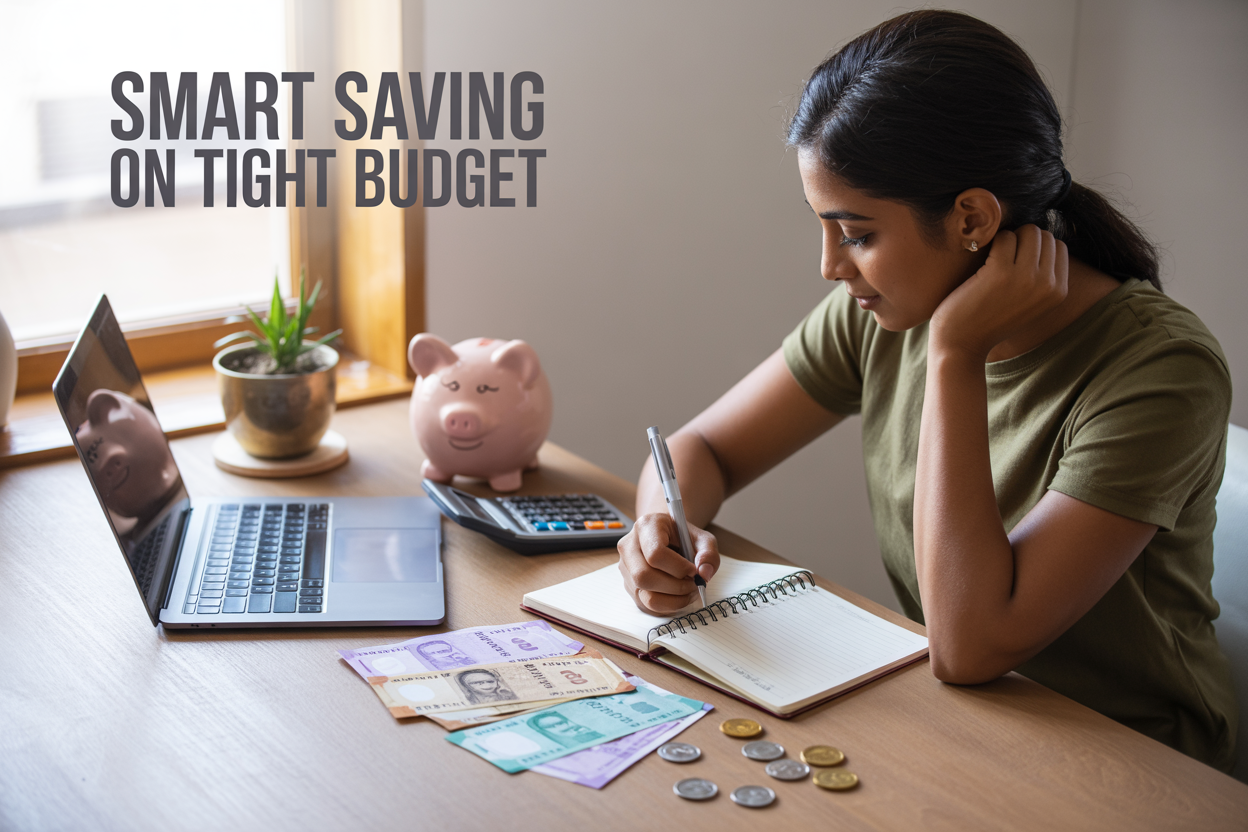
Starting to save money on a tight budget in India doesn’t require big sacrifices—just smart daily choices that add up over time. This guide is for working professionals, students, and families living paycheck to paycheck who want to build real savings even with limited income.
Whether you earn ₹15,000 or ₹50,000 monthly, the challenge remains the same: after covering rent, groceries, and bills, there’s barely anything left. Yet around 34% of Indians live this way, missing out on financial security because they don’t know where to start.
We’ll show you how to track your daily expenses to spot money leaks, create a realistic savings plan that works with your current income, and adopt simple habits that can save you thousands each month. You’ll also learn how to automate your savings so willpower isn’t required, and discover smart ways to grow your money through investments that start as low as ₹500.
The good news? Small changes create big results. Brewing coffee at home instead of buying from cafés can save ₹40,000-₹70,000 annually. Packing lunch instead of eating out could save ₹1.5-₹2 lakh each year. When invested wisely, these savings can grow into ₹70-80 lakh over 25 years.
Track Your Daily Expenses to Build Financial Awareness

Understand Where Your Money Actually Goes Each Day
The first step in saving money on tight budget India is developing genuine awareness of your spending patterns. Most Indians struggle with money management simply because they lack visibility into where their rupees disappear daily. Without proper daily expense tracking India, even well-intentioned savers find themselves wondering why their bank accounts remain empty despite earning decent incomes.
Daily expense tracking reveals the true picture of your financial habits. Every transaction – from your morning chai to evening auto fare – contributes to your overall financial health. The reference data shows that structured planning with real-time tracking forms the foundation of effective personal finance management, allowing you to take the right actions at the right time.
Use Simple Tools and Apps to Monitor Spending Patterns
Technology has revolutionized personal finance India with sophisticated yet user-friendly expense tracking applications. Several top-rated apps cater specifically to Indian users, offering features designed for local spending habits and payment methods.
Moneyview Money Manager App stands out as a comprehensive solution that automatically reads your transactional SMS messages and provides real-time financial visibility. This eliminates manual data entry while categorizing payments and showing major spending areas through weekly and monthly summaries.
Monefy Budget Manager offers an intuitive interface with multi-currency tracking options, making it perfect for users who deal with different denominations. The app provides chart-style spending distribution and syncs across Google Drive or Dropbox accounts.
ET Money brings additional value by offering services in eight Indian languages, making it accessible to users across different regions. It provides intelligent payment notification analysis and free credit rating computation.
For those seeking automation, Wallet Budget Expense Tracker automatically syncs bank account transactions with intelligent categorization, while axio (formerly Walnut) specializes in SMS-based money management specifically designed for Indian payment patterns.
Identify Hidden Money Leaks and Unnecessary Expenses
Once you establish consistent tracking, patterns emerge that reveal unexpected spending drains. These “money leaks” often include forgotten subscriptions, excessive convenience fees, or frequent small purchases that accumulate significantly over time.
The expense tracking data reveals common categories where Indians overspend: food orders, cab bookings, and mobile recharges. Many users discover that their seemingly insignificant daily expenses – like multiple tea breaks or unnecessary app downloads – create substantial monthly outflows.
Smart filtering capabilities in modern apps help identify spending by category, subcategory, payee, payment method, and transaction status. This detailed breakdown exposes patterns you might miss during casual observation, such as consistently overspending on weekends or making unnecessary purchases during specific times of the month.
Spot Emotional Spending Triggers and Impulse Purchases
Smart money saving tips India emphasize understanding the psychological aspects of spending behavior. Expense tracking apps provide timestamps and location data that help identify emotional spending triggers – those moments when you purchase items not out of necessity but due to mood, stress, or social pressure.
Advanced apps like Wallet offer geo-mapping features that show where you spend most frequently, helping identify locations that trigger impulse purchases. Shopping mall visits, online browsing sessions during late hours, or purchases made immediately after receiving salary alerts often indicate emotional rather than planned spending.
The data shows that apps with receipt tracking capabilities, like Wally+, help users become more conscious of their purchasing decisions by requiring them to photograph and categorize each expense. This additional step creates a mental pause that often prevents unnecessary purchases and builds stronger financial planning tight budget awareness.
Create a Realistic Daily Savings Plan That Works

Set Small, Achievable Daily Savings Goals Starting with Rs 50-100
Your journey begins with saving just Rs 50-100 daily rather than setting unrealistic goals. Small amounts make it easier psychologically to commit and stick with the plan. The key to successful saving money on tight budget India is starting with micro-savings targets that don’t overwhelm your current financial situation.
Use the 1% rule to gradually increase your savings rate by just 1% each month. This steady approach makes saving feel natural while building momentum as time passes. Create specific saving purposes like “vacation savings” or “emergency fund” – clear goals make you 42% more likely to succeed compared to saving without purpose.
Track progress visually using a simple savings tracker or app that shows your daily progress. Visual feedback creates a reward system that strengthens your saving habit. Celebrate small wins by taking pride in reaching mini-milestones, such as saving for a week straight. These moments of celebration strengthen positive money habits and keep you motivated throughout your daily expense tracking India journey.
Apply the 50/30/20 Budgeting Rule for Income Allocation
The 50/30/20 rule gives you a straightforward way to divide your income into three key categories, making budget planning for beginners India much more manageable:
50% for needs – These essential expenses must be paid:
- Housing (rent/mortgage)
- Groceries and simple food
- Transportation to work
- Utility bills
- Healthcare
30% for wants – These non-essential but enjoyable expenses include:
- Dining out
- Entertainment subscriptions
- Shopping for non-essentials
- Hobbies and recreation
- Travel
20% for savings/debt – This builds your financial future through:
- Emergency fund contributions
- Retirement investments
- Debt repayment beyond minimums
- Other savings goals
This rule serves as one of the most effective smart money saving tips India offers, providing a clear framework for how to save money with low income while maintaining a balanced lifestyle.
Calculate Your Daily Budget Based on Monthly Income
Divide your monthly income by 30 to calculate your daily budget. This tells you exactly what you can spend each day while staying on track with your financial planning tight budget goals. For example, if your monthly income is Rs 30,000, your daily budget would be Rs 1,000.
Break this down further using the 50/30/20 rule:
- Daily needs budget: Rs 500
- Daily wants budget: Rs 300
- Daily savings target: Rs 200
This calculation method helps you understand your spending capacity and ensures you’re consistently working toward your money saving habits India goals without exceeding your limits.
Track Progress Visually to Stay Motivated
Visual tracking transforms abstract numbers into tangible progress you can see and celebrate. Use apps, charts, or simple notebooks to monitor your daily savings achievements. Many successful savers create visual representations like:
- Savings thermometers showing progress toward monthly goals
- Calendar marking successful saving days
- Digital apps that display growing account balances
- Photo documentation of cash savings in jars or envelopes
Visual feedback creates a reward system in your brain that reinforces positive financial behaviors. When you can see your savings growing day by day, it becomes easier to maintain discipline and resist unnecessary purchases. This visual motivation is particularly effective for personal finance India management, as it provides immediate gratification for delayed financial rewards.
Track your weekly and monthly progress to identify patterns in your spending and saving behaviors. This data helps you adjust your approach and celebrate milestones, making the entire process more engaging and sustainable.
Adopt Smart Daily Habits to Cut Monthly Expenses
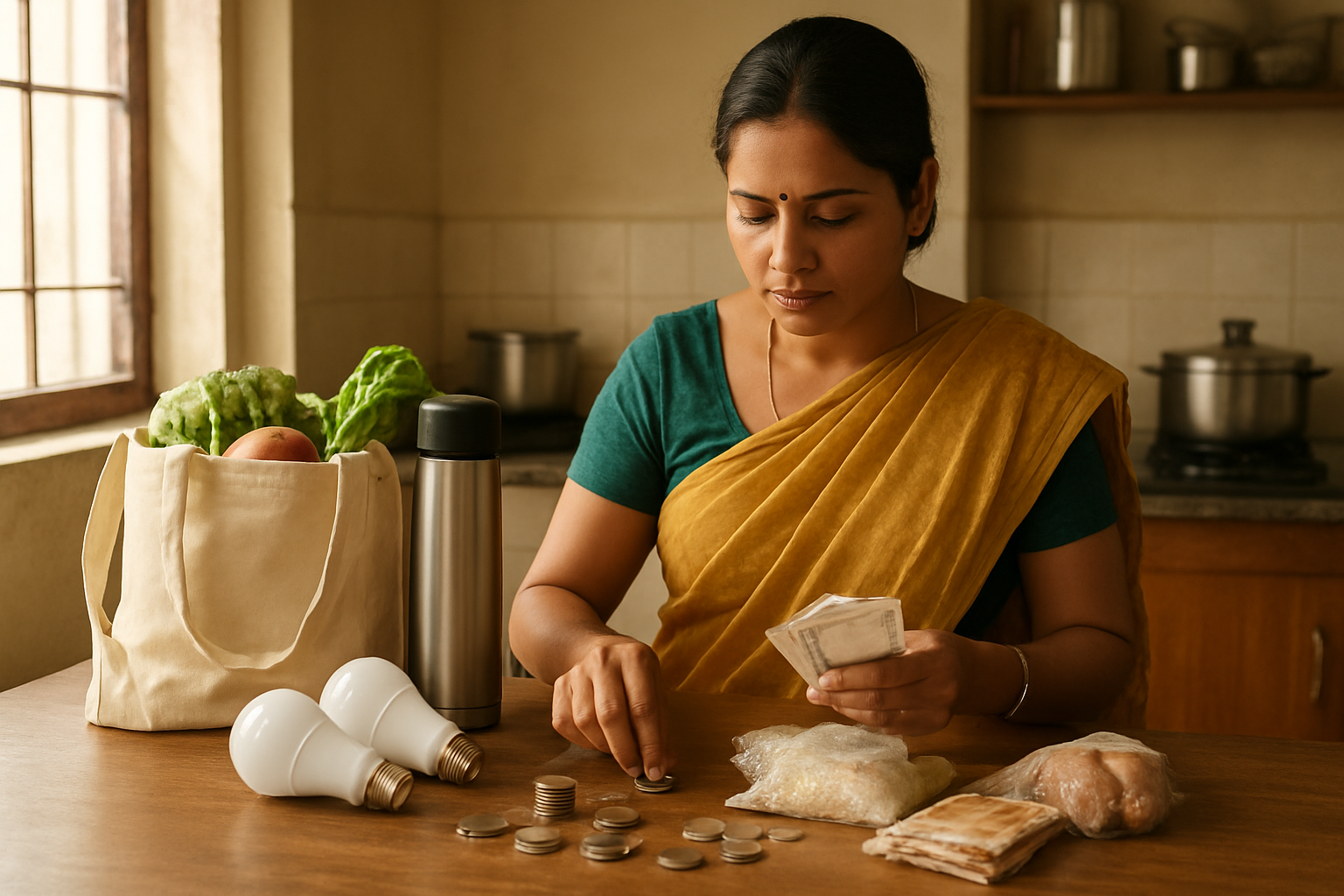
Cook at Home Instead of Eating Out to Save Rs 2000-3000 Monthly
Now that we have covered expense tracking and planning, let’s explore practical daily habits that can significantly reduce your monthly expenses. Home cooking emerges as one of the most effective money saving habits India households have practiced for generations. By preparing meals at home instead of ordering from restaurants or delivery apps like Swiggy, you can easily save Rs 2000-3000 monthly while maintaining better health and nutrition.
The reference content clearly shows how avoiding frequent restaurant meals and delivery orders creates substantial savings. A single meal from a restaurant or food delivery app can cost Rs 150-300, while the same nutritious meal prepared at home costs Rs 50-80. This simple shift in daily expense tracking India shows immediate results in your budget.
Use Public Transport and Carpooling to Reduce Travel Costs
With this in mind, next, we’ll examine transportation strategies. Public transport and carpooling offer significant opportunities for saving money on tight budget India situations. Instead of using private vehicles or ride-hailing services for daily commutes, opt for buses, trains, or shared transportation options.
Many people overlook the cumulative cost of daily transportation. By switching from auto-rickshaws or cabs to public transport, you can reduce monthly travel expenses by 60-70%. Consider carpooling with colleagues or neighbors for regular routes, which splits fuel and maintenance costs while building community connections.
Apply the 24-Hour Rule Before Making Non-Essential Purchases
Previously, impulse buying has derailed many budget plans. The 24-hour rule serves as an effective barrier against unnecessary spending. Before making any non-essential purchase, wait 24 hours to evaluate whether you truly need the item. This cooling-off period helps distinguish between wants and needs, preventing emotional spending that damages your financial planning tight budget goals.
During this waiting period, ask yourself: “Will this purchase add genuine value to my life?” or “Do I already own something similar?” This simple practice can reduce impulsive spending by 40-50%, directly contributing to your smart money saving tips India strategy.
Buy in Bulk and Shop at Discount Stores for Better Deals
Smart shopping strategies form the foundation of effective money saving habits India households employ. Buying staples like rice, dal, oil, and cleaning supplies in bulk quantities offers better per-unit pricing. Visit discount stores and wholesale markets where prices are typically 10-20% lower than retail stores.
The reference content mentions community buying groups where neighbors coordinate bulk purchases together. This approach leverages collective buying power to secure better discounts on groceries and household items. Plan monthly shopping trips to wholesale markets instead of frequent visits to convenience stores, which charge premium prices.
Maximize Cashback and Reward Apps for Regular Purchases
Finally, technology can amplify your savings through cashback and reward applications. Use apps that offer cashback on grocery purchases, utility bill payments, and online shopping. While individual cashback amounts seem small, they accumulate to meaningful savings over time.
Link these apps to your regular spending patterns rather than changing your purchase behavior for rewards. Focus on apps that provide cashback on essential items you already buy, ensuring the rewards complement your personal finance India strategy rather than encouraging additional spending.
Automate Your Savings to Remove Willpower from the Equation

Set Up Automatic Transfers to Separate Savings Accounts
Now that you’ve mastered expense tracking and daily savings habits, it’s time to remove the human element from your saving money on tight budget India journey. Setting up automatic transfers ensures consistent savings without relying on willpower or memory. Most Indian banks offer standing instruction facilities where you can schedule fixed amounts to transfer from your salary account to a dedicated savings account on specific dates each month.
Start with small amounts that won’t strain your budget – even ₹500-1000 monthly can build substantial savings over time. Schedule these transfers for 2-3 days after your salary credit to ensure sufficient balance. This approach to automatic savings India eliminates the temptation to spend money that should be saved.
Use Round-Up Apps for Effortless Micro-Savings
Digital platforms like Jar and Gullak have revolutionized micro-savings for Indians on tight budgets. These apps enable you to save spare change automatically by rounding up your daily transactions. Jar allows you to start investing in 24K digital gold with as little as ₹10, while Gullak offers automated savings starting from ₹50 per day.
The “save on every spend” feature automatically invests small amounts whenever you make online purchases, making daily expense tracking India more rewarding. With over 2 crore Indians trusting Jar and 9 lakh users on Gullak, these platforms prove that micro-savings work effectively for budget-conscious individuals. The beauty lies in saving without feeling the pinch – your morning chai money can accumulate into substantial savings through consistent automated investments.
Split Your Salary into Multiple Goal-Based Accounts
Previously, I’ve discussed tracking expenses, but now we’ll explore compartmentalizing your income strategically. Create separate savings accounts for different financial goals – emergency fund, festival expenses, education, or marriage. Most banks allow multiple savings accounts for the same customer.
Allocate specific percentages of your salary to each account automatically. For instance, dedicate 10% to emergency savings, 5% to festival funds, and 15% to long-term goals. This systematic approach to personal finance India ensures every rupee serves a purpose while maintaining your investment strategies for small amounts philosophy.
Leverage Digital Wallets with Cashback Offers for Bill Payments
With this in mind, next, we’ll see how digital payments can boost your smart money saving tips India strategy. Use digital wallets offering cashback on utility bill payments, mobile recharges, and DTH subscriptions. These cashbacks, though small, accumulate over months when consistently earned on essential expenses.
Set up automatic bill payments through these platforms to earn rewards while ensuring timely payments. The earned cashback can be automatically transferred to your savings accounts or invested in micro-investment platforms. This approach transforms routine bill payments into opportunities for additional savings, supporting your financial planning tight budget objectives without requiring extra money from your pocket.
Grow Your Savings Through Smart Investment Strategies
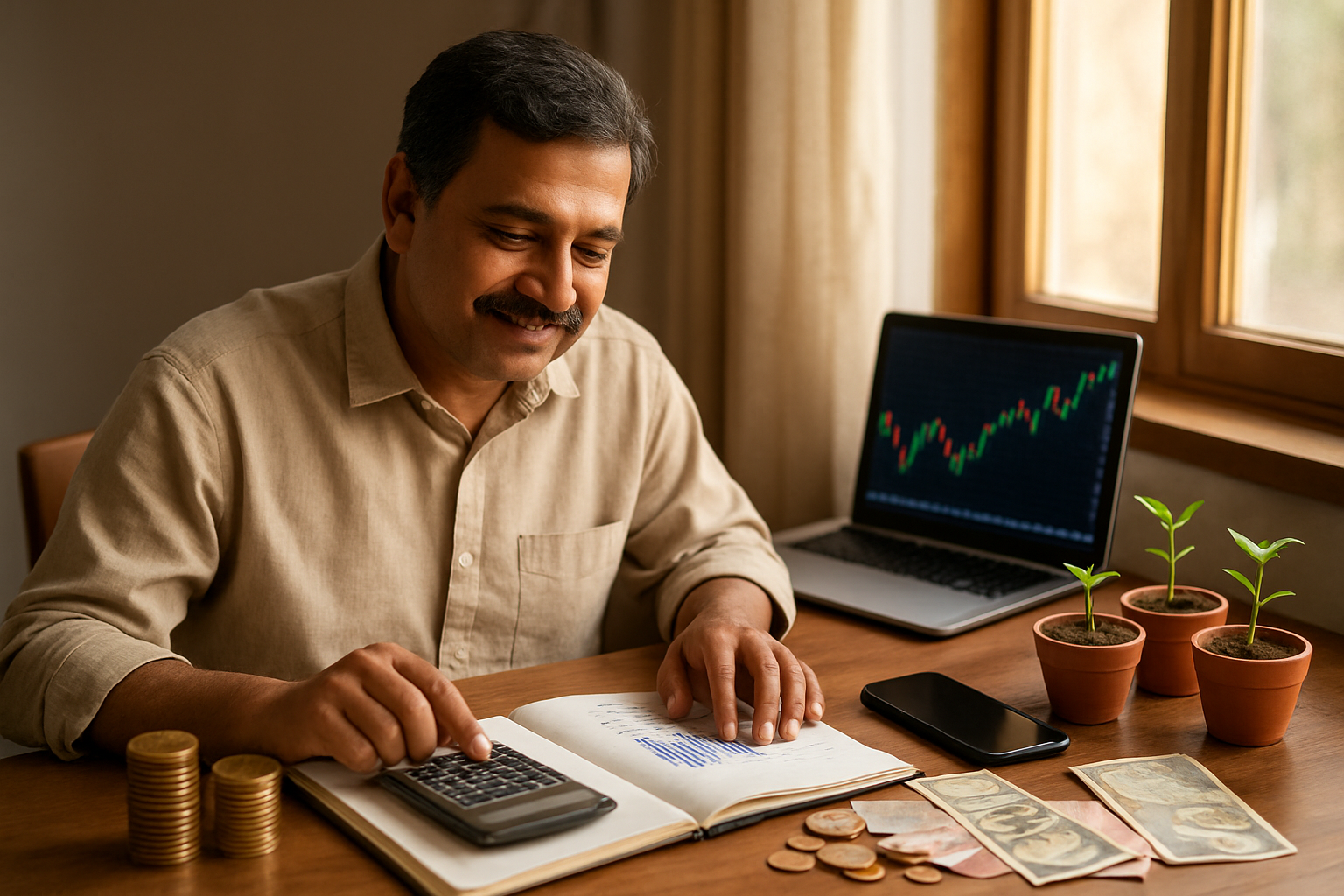
Build an Emergency Fund Covering 3-6 Months of Expenses First
Before exploring investment strategies for small amounts in India, establishing an emergency fund should be your absolute priority. This fund acts as your financial safety net, covering 3-6 months of essential expenses including rent, groceries, utilities, and loan payments. Without this foundation, you risk derailing your investment journey when unexpected expenses arise.
Start by calculating your monthly essential expenses and multiply by three for a basic emergency fund or six for comprehensive coverage. Keep this fund in easily accessible options like high-interest savings accounts or liquid mutual funds. This approach ensures you won’t need to withdraw from long-term investments during emergencies, allowing your wealth-building strategy to remain intact.
Start SIPs and Recurring Deposits with Small Monthly Amounts
Now that we’ve covered emergency fund basics, let’s explore systematic investment approaches that work exceptionally well for tight budgets. Systematic Investment Plans (SIPs) in mutual funds represent one of the most effective investment strategies for small amounts in India.
SIPs allow you to invest as little as ₹500 monthly across equity, debt, or hybrid funds based on your risk tolerance. For tax benefits, consider ELSS (Equity Linked Savings Scheme) mutual funds that offer deductions under Section 80C while building long-term wealth. The beauty of SIPs lies in rupee cost averaging – you purchase more units when markets are low and fewer when high, smoothing out volatility over time.
Recurring deposits complement SIPs perfectly for conservative investors. These government-backed, low-risk options provide guaranteed returns while building disciplined saving habits. Post Office recurring deposits offer competitive rates and can be started with minimal amounts, making them ideal for beginners.
The power of compounding becomes evident when you maintain consistency. Even modest annual increases of 3-5% in your SIP contributions can dramatically accelerate wealth creation. For instance, starting with ₹1 lakh annually and increasing it by 5% yearly at 8% returns creates approximately ₹36.44 lakh over 15 years, compared to ₹27.15 lakh with fixed contributions.
Choose High-Interest Savings Accounts Over Standard Options
Previously, we’ve established the importance of SIPs and recurring deposits. With this foundation, selecting the right savings account becomes crucial for maximizing returns on your liquid funds. High-interest savings accounts significantly outperform standard options, often offering 1-2% additional annual returns.
These accounts serve dual purposes: housing your emergency fund while generating better returns than traditional savings accounts. Many banks offer digital savings accounts with higher interest rates and lower minimum balance requirements, perfect for tight budget scenarios. Compare features like monthly transaction limits, ATM access, and digital banking facilities to find the best fit for your needs.
Avoid Common Investment Mistakes That Reduce Returns
With your investment framework in place, understanding common pitfalls becomes essential for protecting your hard-earned money. Many beginning investors make critical errors that significantly reduce their long-term returns.
The most common mistake is lack of diversification. Rather than putting all money into one investment type, spread your risk across different asset classes. The reference content suggests diversifying across mutual funds, Public Provident Fund (PPF), and government-backed small savings schemes like National Savings Certificates (NSC) and Kisan Vikas Patra (KVP).
Another crucial error is timing the market or making emotional investment decisions. SIPs specifically address this by maintaining discipline regardless of market conditions. Avoid withdrawing investments during short-term market volatility, as this disrupts the compounding effect that builds substantial wealth over time.
Consider your investment horizon and risk appetite carefully. PPF offers guaranteed returns with a 15-year lock-in and tax benefits, making it suitable for long-term goals despite requiring minimum ₹500 annually. For senior citizens, the Senior Citizen Savings Scheme (SCSS) provides higher interest rates tailored to their needs.
Finally, don’t neglect reviewing and rebalancing your portfolio annually. As your income grows, increase your investment contributions by 3-5% yearly to harness the accelerating power of incremental investing combined with compounding returns.

Saving money daily in India doesn’t require massive sacrifices—it’s about making smarter financial choices consistently. Tracking your expenses reveals hidden leaks, while a simple daily savings plan keeps you disciplined. By automating your savings and practising cost-cutting habits like cooking at home, carpooling, and using cashback apps, you can save 15–20% of your income without feeling deprived. Finally, channel these savings into smart investments like SIPs and high-interest accounts to beat inflation and build long-term wealth.
Remember, small daily savings compound into big financial security over time. Even saving ₹100 per day equals ₹36,500 yearly, which can grow to lakhs with proper investments. Start with one simple habit today—track your expenses for a week or automate a ₹50 daily transfer to savings. Your future self will thank you for taking control of your finances now.