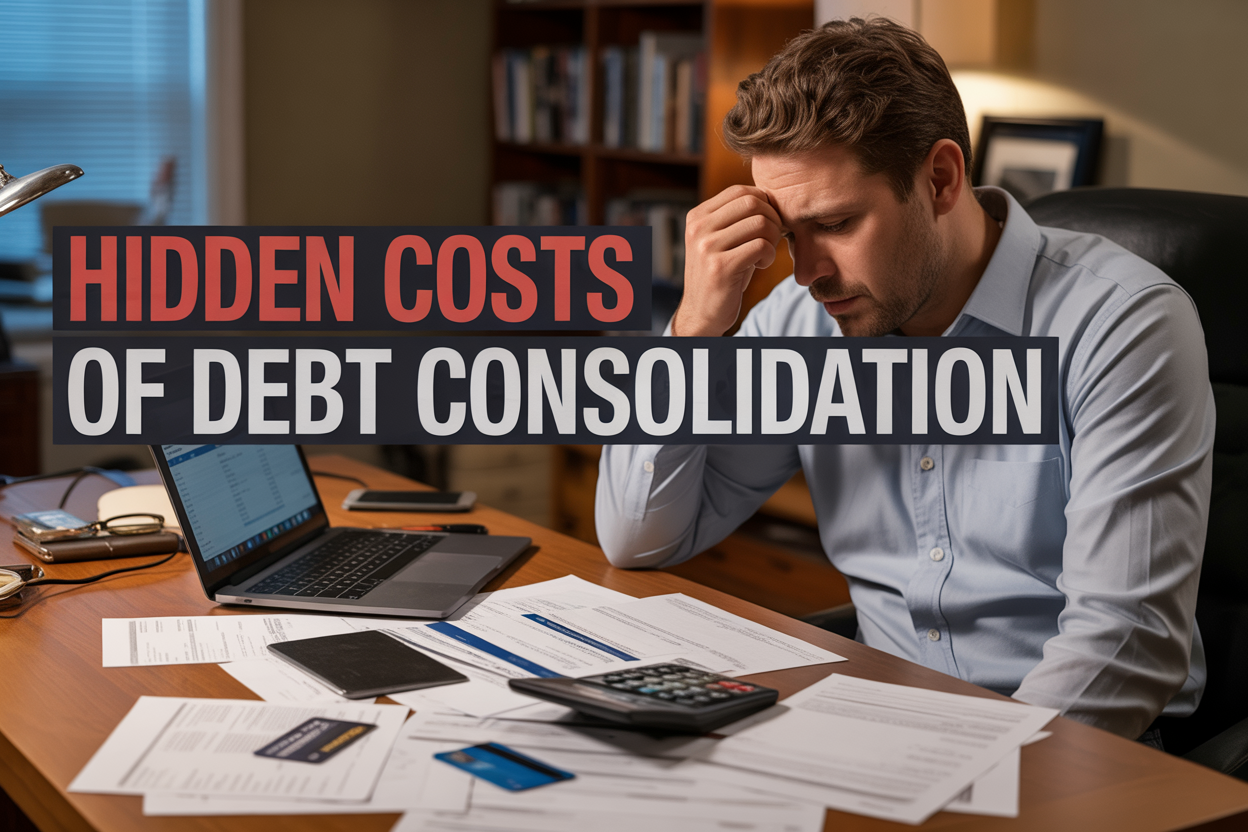
Debt consolidation sounds like a perfect solution when you’re drowning in multiple payments, but many borrowers discover costly surprises that can make their financial situation worse. This guide is for anyone considering debt consolidation who wants to avoid expensive mistakes and make informed decisions about their debt management strategy.
While consolidation can simplify your finances, debt consolidation hidden costs often catch borrowers off guard. From transfer fees and higher long-term interest rates to the temptation of running up new credit card balances, these pitfalls can derail your path to financial freedom.
We’ll explore the most common debt consolidation mistakes, including why ignoring the root cause of your spending problems sets you up for failure and how choosing untrustworthy debt settlement companies can damage your credit and cost you thousands. You’ll also learn why consolidating low-interest debts unnecessarily might increase your total payments and how to avoid falling back into old spending habits after consolidation.
Ignoring the Root Cause of Your Spending Problems

Why debt consolidation alone won’t fix overspending habits
Debt consolidation is often viewed as a financial silver bullet—a solution that promises to eliminate the chaos of multiple payments and high interest rates with a single, manageable loan. However, this perspective fundamentally misunderstands the nature of debt problems. As financial experts emphasize, debt consolidation can seem like the best way to manage debt when bills are stacking up, but it often fails to address the underlying spending habits that led to the debt in the first place.
Think of debt consolidation as putting a bandage on a wound without addressing the infection underneath. While the consolidation might reduce your monthly payments and simplify your financial obligations, it doesn’t address the fact that you’re spending beyond your means. Until you tackle the root cause of your spending habits, the problem is likely to persist, making this one of the most significant hidden costs of debt consolidation that borrowers fail to consider.
Consider a practical example: Imagine you’ve accumulated $12,000 in credit card debt—a combination of essential and non-essential purchases, amplified by inflation. You decide to consolidate this debt into a single, lower-interest loan, hoping it will solve your financial problems. The immediate relief is tangible: lower monthly payments, reduced stress from multiple bills, and the psychological comfort of having “solved” your debt problem.
However, six months later, you notice your credit card balances creeping up again. Without addressing the spending patterns that created the original debt, you’ve simply created breathing room for more borrowing. This scenario is remarkably common and represents one of the most dangerous debt consolidation pitfalls that can leave borrowers in a worse financial position than when they started.
The psychological aspect of this problem cannot be understated. Debt consolidation often provides a false sense of financial recovery. The reduction in monthly payments and the elimination of multiple bills can create an illusion that the underlying financial issues have been resolved. This psychological relief can actually be counterproductive, as it may lead to a relaxation of financial discipline precisely when continued vigilance is most needed.
Moreover, the debt consolidation process itself can reinforce poor financial habits if not approached strategically. Many borrowers focus solely on finding the lowest interest rate or the most manageable monthly payment without examining why they accumulated debt in the first place. This approach treats the symptoms rather than the disease, virtually guaranteeing that the debt problems will resurface.
The Federal Reserve reports that the average American carries $6,271 in credit card debt as of 2023. When combined with other forms of debt like lines of credit, car loans, or student debt, it’s easy to understand why debt consolidation appears attractive. However, without addressing spending habits, consolidation becomes merely a temporary reprieve rather than a permanent solution.
How to identify and address underlying financial behaviors
Understanding and modifying the financial behaviors that lead to debt accumulation requires honest self-assessment and systematic analysis. The first step involves recognizing specific spending patterns that contribute to debt problems, many of which operate below the level of conscious awareness.
One of the most fundamental issues is the absence of a comprehensive budget. This problem occurs when you spend uncontrollably without any idea of whether you’ll have enough money left over. A budget offers a way of being mindful of your spending and comparing it to your resources. Without this foundational tool, even well-intentioned financial decisions become guesswork, making it impossible to identify problematic spending patterns or implement meaningful changes.
To begin identifying problematic behaviors, start by listing all your income and expenses over the past three to six months. This exercise often reveals spending patterns that were previously invisible. Many people discover they’re spending significantly more than they realized on discretionary categories like dining out, entertainment, or impulse purchases. Once you have a clear picture of your actual spending habits, you can start addressing specific areas that contribute to debt accumulation.
Impulse spending represents perhaps the biggest contributor to debt troubles among the spending habits that financial counselors encounter. While occasional discretionary purchases are normal and healthy, too much unplanned spending will blow away any semblance of a budget. The psychological drivers behind impulse spending are complex, often involving emotional regulation, social pressures, or the desire for immediate gratification over long-term financial stability.
Another critical behavior to address is budgeting too closely to your income. When you budget each month, it’s essential that even your worst-case scenario results in a small surplus. Cutting it too close when planning for spending will lead to a deficit. Many people have trouble sticking to a budget, and there are always unplanned expenses both large and small. When you leave no room for error, you increase the chances that unplanned spending will lead to debt.
The relationship with credit cards also requires careful examination. Having too many credit cards creates multiple temptation points for overspending. When available credit is readily accessible, people have a natural tendency to spend because they can do so without having to pay immediately. There’s nothing inherently wrong with having more than one credit card, but having a wallet full of plastic that you’re constantly tempted to use creates unnecessary risk.
Overly optimistic financial thinking represents another behavior pattern that consistently leads to debt problems. Many people rationalize spending money they don’t have by thinking they’ll simply find a way to get the money in the future. However, this approach rarely works out as planned. Budgeting or spending based on speculation rather than current reality is a recipe for financial disaster.
Working with a certified financial counselor can provide invaluable assistance in identifying these behavioral patterns. Professional counselors are trained to help you understand your spending patterns objectively and identify specific areas where you can revise your household budget. They can also help you distinguish between needs and wants, a crucial skill for maintaining financial discipline over the long term.
The process of addressing underlying financial behaviors requires replacing old habits with new ones through consistent practice and regular monitoring. This involves tracking your spending regularly, clearly distinguishing between essential and discretionary expenses, and developing decision-making frameworks that support your long-term financial goals rather than immediate desires.
Creating sustainable spending patterns that prevent future debt
With a clear understanding of problematic spending behaviors, the next crucial step involves establishing sustainable financial patterns that support long-term debt freedom. Creating these patterns requires both systematic planning and the development of specific skills and habits that reinforce responsible financial decision-making.
The foundation of sustainable spending patterns lies in developing a realistic, flexible budget that accounts for both expected expenses and life’s inevitable surprises. This budget should include specific categories for essential expenses like housing, transportation, and food, while also allocating funds for discretionary spending and emergency situations. The key is building a little extra into your monthly budget to stay above water when unexpected expenses emerge.
Emergency fund development represents one of the most critical components of sustainable financial patterns. According to recent surveys, approximately 78% of Americans live paycheck to paycheck each month, and 63% of Americans can’t afford a $500 car repair or a $1,000 emergency room bill. Without an emergency fund, unexpected expenses immediately create debt, perpetuating the cycle that debt consolidation was meant to break.
Building an emergency fund requires consistent, small contributions over time rather than attempting to save large amounts sporadically. Start by setting aside a small amount each month—even $25 or $50—into a separate savings account that’s designated exclusively for emergencies. Resist the urge to tap into this fund for non-emergency purposes, keeping this account strictly off-limits except when truly needed.
The development of decision-making frameworks for purchases represents another essential element of sustainable spending patterns. One effective approach involves implementing waiting periods for non-essential purchases. The best way to avoid impulse spending is by waiting a week, or 30 days if possible, to make sure you really want and can really afford that impulse purchase. This cooling-off period allows emotional impulses to subside and enables more rational financial decision-making.
Credit card management requires particular attention in creating sustainable patterns. After consolidating debt, it’s tempting and all too common to start using credit cards again, but this represents a slippery slope that can lead right back to the original debt problems. Consider an example: You’ve consolidated $15,000 in credit card debt into a personal loan with a lower interest rate. As financial pressure eases, you start using your credit cards again for everyday expenses and small splurges. Initially, it feels manageable, but over time, these charges accumulate, and before you know it, you’ve racked up $3,000 in new credit card debt.
To prevent this scenario, consider making your credit cards less accessible by cutting them up or storing them securely. Keep just one or two low-limit cards for genuine emergencies to help prevent overspending while maintaining some credit availability for true emergencies. This approach provides peace of mind while maintaining accountability for your spending decisions.
Regular financial review and goal adjustment represent ongoing requirements for maintaining sustainable spending patterns. After consolidating debt, it’s crucial to update your financial goals to ensure you stay on track. Without clear, updated goals, you might struggle to maintain financial discipline and end up falling back into old habits.
Take time to review and update your financial goals regularly, ideally with the support of a certified financial counselor who can help create a personalized plan. Set specific, achievable targets for saving, budgeting, and debt repayment, and maintain patience with yourself throughout the process. These goals should be specific, measurable, and aligned with your current financial situation rather than based on optimistic projections about future income or circumstances.
The development of sustainable spending patterns also requires ongoing education and skill development. Financial literacy isn’t a one-time achievement but rather an ongoing process of learning and adaptation. Stay informed about personal finance principles, continue learning about budgeting techniques, and remain open to adjusting your approaches as your financial situation evolves.
Finally, remember that sustainable financial patterns require consistent implementation over time. The habits and systems you develop must be maintainable over months and years, not just weeks. Focus on creating patterns that feel sustainable and realistic given your lifestyle and financial constraints, rather than attempting dramatic changes that are difficult to maintain long-term.
Regular monitoring and adjustment of these patterns ensures they remain effective as your life circumstances change. Schedule monthly or quarterly reviews of your budget, spending patterns, and financial goals to ensure you’re staying on track and making necessary adjustments as your situation evolves.
Failing to Research All Available Consolidation Options

Hidden fees in balance transfer credit cards
Balance transfer credit cards often appear as attractive debt consolidation options, especially when they advertise promotional 0% interest rates. However, these seemingly beneficial financial products come with several hidden costs that can significantly impact your overall savings and financial recovery plan.
The most common and substantial hidden fee associated with balance transfer credit cards is the balance transfer fee. According to industry standards, these fees typically range from 3% to 5% of the total amount you’re transferring. This means if you’re consolidating $10,000 in credit card debt, you could face an upfront cost of $300 to $500 just to complete the transfer. This fee is usually either deducted from the funds you receive or added directly to your new card’s balance, immediately increasing the total amount you owe.
Many consumers make the critical mistake of focusing solely on the promotional interest rate while overlooking this significant upfront cost. The balance transfer fee can quickly erode the potential savings from a lower interest rate, particularly if you’re transferring smaller debt amounts or if the promotional period is relatively short.
Beyond the transfer fee, balance transfer credit cards may include additional charges that aren’t immediately apparent during the application process. Annual fees can range from $39 to $99 or more, depending on the card’s features and benefits. While some cards waive the annual fee for the first year, this cost will kick in during your second year, potentially adding unexpected expenses to your debt repayment journey.
Late payment fees represent another hidden cost that can derail your consolidation efforts. If you miss a payment by even one day, you could face fees ranging from $29 to $40. More critically, a single late payment can trigger the end of your promotional interest rate period, immediately subjecting your remaining balance to the card’s regular APR, which can be significantly higher than your original debts.
Cash advance fees also pose a risk if you’re tempted to use the new card for emergency expenses. These fees typically range from 3% to 5% of the advance amount, with a minimum fee of $10 to $25. Cash advances also begin accruing interest immediately at a higher rate than regular purchases, with no grace period.
Promotional rate traps that cost more long-term
Promotional interest rates, while attractive, often function as sophisticated traps that can leave consumers worse off than before consolidation. The most dangerous aspect of these promotional offers is their temporary nature and the dramatic rate increases that follow.
A typical balance transfer credit card might offer 0% APR for 12 to 21 months, creating an illusion of substantial savings. However, once this promotional period expires, the interest rate often jumps to 18% to 29% APR or higher. This dramatic increase can result in monthly payments that exceed what you were paying on your original debts, particularly if you haven’t made significant progress in paying down the principal balance during the promotional period.
The promotional rate trap becomes especially problematic when consumers fail to create a realistic payoff plan. For example, if you transfer $7,000 in debt to a card offering 0% APR for 21 months, you need to pay approximately $333 per month to eliminate the debt before the promotional rate expires. Many consumers underestimate this requirement and find themselves facing steep interest charges on their remaining balance when the promotional period ends.
Credit card companies often structure these promotional offers to maximize their long-term profits. They understand that many consumers will not pay off their entire balance during the promotional period, allowing the company to collect substantial interest payments once the regular rate takes effect. This business model relies on consumer behavior patterns that show most people focus on immediate relief rather than long-term financial planning.
Another trap involves the terms and conditions that can void the promotional rate. Missing a single payment, exceeding your credit limit, or making a late payment to any other creditor (not just the balance transfer card) can trigger the immediate end of your promotional rate. These penalty clauses are often buried in the fine print and can catch consumers off guard.
The psychological impact of promotional rates can also lead to poor financial decisions. The temporary relief from high interest charges may create a false sense of financial security, leading consumers to relax their debt repayment efforts or even accumulate new debt. This behavior pattern can result in a worse financial situation than before the consolidation.
Some promotional offers include teaser rates that apply only to balance transfers, while new purchases are subject to the regular APR from day one. This structure can create confusion about which payments are applied to which balance, potentially extending the time needed to pay off the transferred debt.
How to properly compare interest rates and terms
When evaluating debt consolidation options, a comprehensive comparison approach is essential to avoid costly mistakes and identify the most beneficial solution for your specific situation. The process requires analyzing multiple factors beyond the advertised interest rate.
Start by creating a detailed inventory of all your existing debts, including current balances, interest rates, minimum monthly payments, and remaining payment terms. This baseline information allows you to accurately calculate potential savings from different consolidation options. For each debt, note whether the interest rate is fixed or variable, as this affects long-term cost projections.
Calculate the Annual Percentage Rate (APR) for each consolidation option, which includes both the interest rate and additional fees. A personal loan with a 10% interest rate and a 5% origination fee has an effective first-year APR higher than 10%. Similarly, a balance transfer card with 0% promotional APR but a 3% transfer fee has an effective rate that depends on your payoff timeline.
Consider the following comparison framework based on real examples from the reference content. For $7,000 in total debt across three credit cards at 24% APR:
Option 1: No Consolidation (Status Quo)
- Paying minimum amounts only
- Total interest paid: $13,332.12
- Time to payoff: 319 months
- Monthly payment: Varies, minimum only
Option 2: Personal Loan at 10% APR
- Monthly payment: $339
- Total interest paid: $790
- Time to payoff: 24 months
- Includes origination fee consideration
Option 3: Balance Transfer Card (0% for 21 months)
- Monthly payment: $347
- Total interest paid: $0 (if paid within promotional period)
- Time to payoff: 21 months
- Includes transfer fee in calculation
When comparing these options, the balance transfer card appears most attractive, but only if you can maintain the $347 monthly payment and complete payoff within 21 months. If you can only afford $250 monthly, you’ll carry a balance beyond the promotional period, potentially making the personal loan more cost-effective.
Examine the payment structure and flexibility of each option. Personal loans typically offer fixed monthly payments and defined payoff dates, providing predictability for budgeting purposes. Credit cards offer more payment flexibility but require stronger self-discipline to avoid extending the repayment period.
Evaluate qualification requirements honestly. Your credit score, income, and debt-to-income ratio determine which options are realistically available. Pre-qualification tools allow you to check potential rates without impacting your credit score, providing a clearer picture of your actual options rather than advertised rates you might not qualify for.
Research lender reputation and customer service quality, particularly important if you encounter financial difficulties during repayment. Some lenders offer hardship programs or payment deferrals, while others maintain rigid policies that could worsen your situation during temporary financial setbacks.
Consider the long-term implications of each option on your credit profile. Personal loans add installment account history, while balance transfers affect your credit utilization ratio. Understanding these impacts helps you choose an option that supports your broader financial goals.
Account for any prepayment penalties or restrictions. Some consolidation loans penalize early payoff, while others encourage it. If you anticipate receiving additional funds (tax refund, bonus, inheritance) that could accelerate your debt payoff, ensure your chosen option allows penalty-free early repayment.
Factor in your personal financial discipline and spending habits. If you have a history of accumulating credit card debt, keeping multiple paid-off credit cards available after consolidation could lead to reaccumulating debt. In such cases, a personal loan that pays off and closes credit card accounts might provide better long-term protection despite potentially higher costs.
Review the terms for rate changes, particularly with variable-rate options. Some personal loans start with attractive rates that increase over time, while credit cards may offer promotional rates on future purchases that could tempt additional spending.
Calculate break-even points for different scenarios. Determine how long you’d need to benefit from a lower rate to offset upfront fees, and compare this timeline to your realistic payment capabilities. This analysis reveals whether paying higher upfront costs for better long-term rates makes financial sense for your situation.
Consolidating Low-Interest Debts Unnecessarily

Why Rolling Student Loans into High-Interest Consolidation Hurts You
One of the most costly debt consolidation mistakes involves unnecessarily combining federal student loans with other debts, particularly when those student loans carry lower interest rates than the consolidation option. This debt consolidation pitfall can significantly increase your overall borrowing costs and eliminate valuable benefits that come specifically with federal student loans.
When you consolidate federal student loans through a private debt consolidation loan, you’re essentially replacing government-backed loans that often have interest rates between 3-7% with private loans that can carry rates of 8-15% or higher, depending on your creditworthiness. The reference data shows that federal student loans use a weighted average calculation for interest rates, which often results in more favorable terms than private consolidation loans offer.
The weighted interest rate calculation for federal consolidation works by multiplying each loan amount by its interest rate to create a “per loan weight factor,” then dividing the total weight factor by the total loan amount. This mathematical approach typically produces lower rates than what private lenders offer for unsecured debt consolidation loans. When you abandon this federal system for private consolidation, you’re trading a government-calculated, often lower rate for a market-rate loan that treats your student debt the same as credit card debt.
Beyond interest rate concerns, rolling federal student loans into private consolidation eliminates access to income-driven repayment (IDR) plans, which can significantly reduce monthly payments based on your income and family size. These plans offer payment flexibility that private loans simply cannot match, making consolidation a particularly poor choice for borrowers who might face income fluctuations.
The loss of Public Service Loan Forgiveness (PSLF) eligibility represents another substantial hidden cost. Federal employees, teachers, nonprofit workers, and other public service professionals who consolidate their federal loans into private debt lose the opportunity to have their remaining loan balance forgiven after 120 qualifying payments. This benefit can be worth tens of thousands of dollars for eligible borrowers.
Federal student loans also offer unique protections during financial hardship, including deferment and forbearance options that private consolidation loans typically don’t provide. Additionally, federal loans offer discharge options in cases of permanent disability, school closure, or other qualifying circumstances that private lenders rarely match.
Strategic Debt Selection for Maximum Savings
Now that we’ve covered why mixing student loans with other debt types can be problematic, it’s essential to understand how strategic debt selection can maximize your consolidation savings while avoiding unnecessary debt consolidation risks.
The key to effective debt consolidation lies in carefully analyzing each debt’s interest rate, terms, and benefits before deciding what to include in your consolidation strategy. This selective approach helps you avoid debt consolidation pitfalls while focusing on debts that genuinely benefit from consolidation.
Start by creating a comprehensive inventory of all your debts, including credit cards, personal loans, student loans, and any other obligations. List the current interest rate, minimum monthly payment, remaining balance, and any special terms or benefits for each debt. This debt consolidation options comparison will reveal which debts are good consolidation candidates and which should remain separate.
High-interest credit card debt typically represents the best consolidation candidate, especially when you can secure a consolidation loan with an interest rate significantly lower than your credit cards. Credit cards often carry interest rates between 18-29%, making almost any consolidation loan an improvement. These debts also lack the special benefits and protections that make other loan types worth preserving separately.
Personal loans with high interest rates also make good consolidation candidates, particularly if they lack special terms or benefits. However, be cautious about consolidating personal loans that already have relatively low rates or favorable terms, as you might lose more than you gain through consolidation.
Store credit cards and retail financing agreements often carry extremely high interest rates, sometimes exceeding 25-30%, making them prime candidates for inclusion in your consolidation strategy. These debts rarely offer benefits worth preserving, and their high rates can create substantial long-term costs if left unconsolidated.
When evaluating potential savings, calculate the total interest you’ll pay over the life of each loan both before and after consolidation. This calculation should include any fees associated with the consolidation loan, such as origination fees, which can range from 1-8% of the loan amount. Only proceed with consolidation if the total cost savings outweigh these fees and any lost benefits.
Consider the repayment timeline carefully as part of your strategic selection. While consolidation might lower your monthly payments, extending the repayment period can increase total interest costs even with a lower rate. The reference content emphasizes this concern, noting that consolidation could extend repayment periods from 10 to 20 years, potentially doubling the total interest paid despite lower monthly payments.
Federal Family Education Loan (FFEL) Program borrowers face particular strategic considerations. Many FFEL borrowers receive interest rate reductions for making on-time payments, sometimes reducing rates by 2% or more. Including these loans in consolidation means losing these beneficial rate reductions, as the consolidation calculation uses the original statutory rate rather than your reduced rate.
Keeping Beneficial Low-Rate Debts Separate
Previously, I’ve outlined why certain debts make poor consolidation candidates, but understanding which specific loans to keep separate requires deeper analysis of the benefits and protections you might lose through consolidation.
Federal student loans should almost always remain separate from other debt consolidation efforts, regardless of their interest rates. Even federal student loans with relatively high rates (6-7%) offer benefits that private consolidation cannot replicate. The ability to access income-driven repayment plans alone can be worth thousands of dollars for borrowers facing financial hardship.
The reference content specifically warns about losing credit for qualifying payments toward IDR forgiveness when consolidating. If you’ve already made progress toward the 240 payments required for IDR forgiveness, consolidating would reset your payment count to zero, potentially costing you years of progress and thousands of dollars in eventual forgiveness.
Similarly, Public Service Loan Forgiveness progress gets reset with consolidation, making it particularly important for public service workers to keep federal loans separate. The reference data notes that while there was a temporary adjustment period allowing some payment credits to transfer, this benefit has specific time limitations and shouldn’t be relied upon for future consolidations.
Federal Perkins Loans deserve special consideration due to their unique cancellation benefits. Healthcare workers, teachers, law enforcement officers, and other professionals can qualify for partial or complete Perkins Loan cancellation based on their service. These benefits are incredibly valuable and completely unavailable through private consolidation loans, making Perkins Loans poor candidates for inclusion in debt consolidation strategies.
Certain state-sponsored student loans also offer benefits worth preserving. Some states provide loan forgiveness programs for residents who remain in-state after graduation, work in designated professions, or serve in underserved areas. Including these loans in private consolidation eliminates eligibility for these state-specific benefits.
Auto loans with low promotional rates, typically those secured during special financing events, should generally remain separate from consolidation efforts. These loans often carry rates below 3%, making them cheaper than most consolidation options. Additionally, auto loans are secured by the vehicle itself, giving lenders less risk and borrowers more favorable terms than unsecured consolidation loans can offer.
Mortgages virtually never belong in debt consolidation strategies due to their secured nature, long terms, and typically low interest rates. Home equity loans and lines of credit also deserve careful consideration, as they often offer tax-deductible interest and rates lower than unsecured consolidation loans.
Some personal loans, particularly those obtained during promotional periods or through credit unions, may carry rates low enough to warrant keeping separate. Credit union loans often offer more favorable terms than commercial lenders, and their member-focused approach can provide benefits that consolidation eliminates.
With this in mind, next, we’ll see that the decision to keep certain debts separate should also consider your overall financial strategy and risk tolerance. Some borrowers prefer the simplicity of consolidation even when it costs slightly more, while others prioritize maximum savings regardless of complexity.
The reference content emphasizes that federal loan consolidation is irreversible, stating “once your loans are combined into a Direct Consolidation Loan, you can’t undo this consolidation.” This permanence makes the decision to include or exclude specific debts particularly important, as you cannot reverse course if you later realize you’ve made a mistake.
Before finalizing your debt selection strategy, consider consulting with a nonprofit credit counselor or financial advisor who can provide personalized guidance based on your specific situation. These professionals can help you identify hidden costs of debt consolidation that might not be immediately apparent and ensure you’re making decisions that align with your long-term financial goals.
Remember that effective debt consolidation isn’t about combining all your debts into one payment—it’s about strategically selecting which debts benefit from consolidation while preserving the valuable terms and benefits of others. This selective approach helps you avoid common debt consolidation mistakes while maximizing your potential savings and maintaining access to important borrower protections.
Choosing Untrustworthy Debt Settlement Companies

Red Flags of Predatory Debt Consolidation Firms
When searching for debt consolidation solutions, one of the most significant debt consolidation risks involves falling victim to predatory companies that prey on financially vulnerable consumers. These unscrupulous firms often target individuals who are desperate for relief from overwhelming debt, making them particularly susceptible to aggressive sales tactics and misleading promises.
The first major red flag to watch for is upfront fees demanded before any services are provided. Legitimate debt consolidation companies typically don’t require large payments before demonstrating results. Predatory firms, however, often demand substantial fees ranging from hundreds to thousands of dollars upfront, claiming these payments are necessary to “secure your position” or “guarantee approval.” This practice violates regulations in many states and should immediately raise concerns about the company’s legitimacy.
Another warning sign involves unrealistic promises that seem too good to be true. Predatory debt settlement companies frequently guarantee they can eliminate 50-70% of your debt or promise to resolve all your financial problems within an impossibly short timeframe. These companies may claim they have special relationships with creditors or insider knowledge that allows them to negotiate deals that others cannot. In reality, debt settlement outcomes vary significantly based on individual circumstances, and no company can guarantee specific results.
High-pressure sales tactics represent another critical red flag. Legitimate debt consolidation services allow potential clients time to review contracts, ask questions, and make informed decisions. Predatory firms, conversely, often use urgency tactics, claiming their “special offer” expires immediately or that waiting will result in missed opportunities. They may keep potential clients on lengthy sales calls, refusing to provide written information or pressuring for immediate commitments.
Lack of proper licensing and accreditation serves as a fundamental warning sign. Reputable debt consolidation companies maintain proper state licensing, hold accreditations from recognized organizations, and operate with transparency about their credentials. Predatory firms often operate without required licenses or make false claims about their accreditations. They may also refuse to provide clear information about their business practices, fee structures, or success rates.
Communication red flags include companies that contact you unsolicited through cold calls, emails, or direct mail campaigns promising immediate debt relief. Legitimate debt consolidation services typically don’t engage in aggressive marketing campaigns targeting financially distressed consumers. Additionally, be wary of companies that discourage you from communicating with your creditors or advise you to stop making payments immediately without explaining the serious consequences of such actions.
The absence of clear, written contracts represents another significant warning sign. Predatory companies often operate with vague verbal agreements or contracts filled with confusing language and hidden clauses. They may be reluctant to provide detailed written explanations of their services, fees, timelines, or potential risks. This lack of transparency makes it difficult for consumers to understand exactly what they’re agreeing to and what protections they have.
How Aggressive Tactics Can Damage Your Credit Score
Now that we have covered the warning signs of predatory debt consolidation firms, it’s crucial to understand how their aggressive tactics can severely damage your credit score and overall financial standing. These debt consolidation mistakes can have lasting consequences that extend far beyond the immediate financial relief you’re seeking.
One of the most damaging tactics employed by unscrupulous debt settlement companies involves advising clients to immediately stop making payments on their existing debts. These companies often claim that stopping payments will force creditors to negotiate more favorable settlement terms. However, this strategy typically results in severe credit score damage as missed payments are reported to credit bureaus, creating negative marks that can remain on your credit report for up to seven years.
When you stop making payments as advised by these companies, your accounts quickly become delinquent, leading to a cascade of negative consequences. Initially, you’ll face late payment fees and increased interest rates. After 30 days of non-payment, creditors typically report the delinquency to credit bureaus, causing an immediate drop in your credit score. This damage compounds with each additional month of missed payments, with 60-day, 90-day, and eventually charge-off notations appearing on your credit report.
The aggressive debt settlement process itself can further harm your credit score through the settlement notation that appears on your credit report. When debts are settled for less than the full amount owed, this information is recorded and can significantly impact your creditworthiness for years to come. Future lenders view settled debts as an indication of financial instability and may either deny credit applications or offer less favorable terms.
Predatory companies often fail to adequately explain the tax implications of debt settlement, which can create additional financial burdens. When creditors forgive portions of debt through settlement agreements, the forgiven amount may be considered taxable income by the IRS. This can result in unexpected tax liabilities that further strain your financial situation, particularly if you’re unprepared for these additional costs.
The timing of debt settlement negotiations can also negatively impact your credit score. While predatory companies collect monthly fees from clients, they may delay actual negotiations with creditors for months or even years. During this extended period, your credit continues to deteriorate as accounts remain in delinquent status. Some companies deliberately prolong this process to collect more fees before attempting any meaningful debt resolution.
Another way aggressive tactics damage credit scores involves the potential for lawsuits and judgments. When you stop making payments as advised by debt settlement companies, creditors may choose to pursue legal action rather than negotiate settlements. Court judgments appear on credit reports and represent some of the most severe negative marks possible, often resulting in wage garnishments or asset seizures that compound financial difficulties.
The disruption of positive payment history represents an often-overlooked consequence of aggressive debt settlement tactics. Payment history comprises 35% of your FICO credit score calculation, making it the most influential factor in determining creditworthiness. When debt settlement companies advise stopping all payments, you’re essentially eliminating any opportunity to maintain positive payment history on those accounts, accelerating credit score decline.
Finding Legitimate Nonprofit Credit Counseling Agencies
With this in mind, next, we’ll explore how to identify and work with legitimate nonprofit credit counseling agencies that can provide genuine debt consolidation options comparison and guidance without the risks associated with predatory firms. These organizations offer a stark contrast to the questionable practices of for-profit debt settlement companies and provide legitimate pathways to financial recovery.
Legitimate nonprofit credit counseling agencies operate under strict guidelines and regulatory oversight designed to protect consumers. These organizations typically hold accreditation from recognized bodies such as the National Foundation for Credit Counseling (NFCC) or the Financial Counseling Association of America (FCAA). Unlike predatory debt settlement companies, legitimate nonprofits focus on education, budgeting assistance, and sustainable debt management rather than quick fixes or unrealistic promises.
The first step in identifying legitimate nonprofit credit counseling agencies involves verifying their nonprofit status and accreditations. Genuine nonprofit organizations must maintain their tax-exempt status with the IRS, which can be verified through the IRS website or charity verification services. Additionally, reputable agencies display their accreditations prominently and provide easy access to information about their credentials, board of directors, and financial transparency reports.
Legitimate nonprofit credit counseling agencies offer comprehensive financial education as a cornerstone of their services. Rather than simply focusing on debt reduction, these organizations provide holistic financial wellness programs that address budgeting, savings, credit education, and long-term financial planning. They typically require clients to complete educational components before enrolling in debt management programs, ensuring clients understand both the benefits and potential drawbacks of various debt consolidation options.
The fee structure of legitimate nonprofit agencies differs significantly from predatory for-profit companies. While nonprofit agencies may charge reasonable fees for certain services, these fees are typically modest and clearly disclosed upfront. Many services, including initial consultations and financial counseling sessions, are often provided free of charge. When fees are charged, they’re generally used to support the organization’s educational mission rather than generate profits for owners or shareholders.
Counseling sessions with legitimate nonprofit agencies are conducted by certified financial counselors who have completed extensive training and continuing education requirements. These professionals take time to thoroughly review clients’ financial situations, exploring all available options rather than pushing specific products or services. They provide personalized advice based on individual circumstances and help clients develop realistic, sustainable debt repayment strategies.
Legitimate nonprofit credit counseling agencies maintain transparency throughout their processes. They provide detailed written explanations of all services, fees, timelines, and potential outcomes. Clients receive clear documentation outlining their rights and responsibilities, and agencies encourage questions and provide honest assessments of both the benefits and limitations of proposed solutions. This transparency extends to success rates, with reputable agencies providing realistic statistics about client outcomes.
The debt management plans offered by legitimate nonprofit agencies operate differently from the settlement programs promoted by predatory companies. These plans typically involve negotiating with creditors to reduce interest rates, eliminate fees, and establish manageable payment schedules while keeping accounts in good standing. Clients continue making payments through the agency, which distributes funds to creditors according to the agreed-upon terms. This approach helps protect credit scores while providing structured debt relief.
When evaluating potential nonprofit credit counseling agencies, it’s important to research their reputation through multiple sources. Check with state attorney general offices, Better Business Bureau ratings, and online reviews from verified clients. Legitimate agencies typically have long-standing community relationships and positive reputations built over years of ethical service. They’re also transparent about any complaints or regulatory actions and can explain how they’ve addressed past issues.
The consultation process with legitimate nonprofit agencies provides another way to distinguish them from predatory companies. Reputable organizations typically offer free initial consultations during which they thoroughly review your financial situation without pressure to commit to specific services. They explain various options available, including alternatives to debt consolidation, and help you understand the pros and cons of each approach. This consultative approach contrasts sharply with high-pressure sales tactics used by predatory firms.
Ongoing support represents a hallmark of legitimate nonprofit credit counseling agencies. These organizations maintain long-term relationships with clients, providing continued education, monitoring progress, and adjusting strategies as circumstances change. They typically offer regular check-ins, financial education workshops, and resources to help clients maintain financial stability after completing debt management programs. This comprehensive support system helps ensure lasting financial recovery rather than temporary relief that may lead to future debt problems.
Returning to Credit Card Usage Too Quickly

The Temptation Trap After Consolidation Relief
With debt consolidation offering significant relief from overwhelming financial pressure, many individuals experience a false sense of financial freedom that can become their greatest pitfall. This psychological phenomenon occurs when the immediate relief of simplified payments and potentially lower monthly obligations creates an illusion that the underlying financial challenges have been completely resolved.
The temptation trap manifests in several dangerous ways. First, the psychological relief of having “solved” the debt problem often leads to relaxed financial vigilance. When multiple high-interest credit cards are consolidated into a single payment, the mental burden lifts dramatically. However, this relief can create overconfidence in one’s financial management abilities, leading to premature celebration and loosened spending controls.
The availability of newly cleared credit limits presents another significant temptation. After consolidation, previously maxed-out credit cards suddenly show zero balances with full credit limits available. This dramatic shift from financial constraint to apparent abundance can trigger impulsive decision-making. The brain, which had been operating under financial stress, may interpret this change as permission to resume previous spending patterns.
Many individuals fall into the trap of believing they’ve earned the right to spend again. After months or years of tight budgeting and financial discipline required to qualify for debt consolidation, the desire to reward oneself becomes overwhelming. This psychological reward mechanism often overrides logical financial planning, leading to immediate credit card usage for non-essential purchases.
The timing of this temptation is particularly dangerous because it typically occurs during the honeymoon phase of debt consolidation, when monthly payments may be lower than before, creating additional perceived disposable income. This temporary financial breathing room can mask the reality that the total debt burden hasn’t disappeared—it’s simply been restructured.
How New Charges Can Double Your Debt Burden
The mathematics of post-consolidation credit card usage reveal why returning to plastic too quickly can create an even more devastating financial situation than before. When individuals begin accumulating new credit card debt while still paying off their consolidation loan, they effectively create a dual debt burden that can spiral out of control rapidly.
Consider the typical consolidation scenario: $20,000 in credit card debt consolidated into a personal loan with a 5-year repayment term. The original debt is now structured as predictable monthly payments, but the credit cards remain open with restored spending limits. If someone begins charging $500 monthly on these cards, they’re simultaneously paying off old debt while accumulating new debt at potentially higher interest rates.
The compounding effect becomes particularly severe because credit card interest rates are typically much higher than consolidation loan rates. While the consolidation loan might carry a 10-12% interest rate, credit cards often charge 18-25% or more. This means new charges accumulate interest at nearly double the rate of the consolidated debt, creating an accelerated debt growth pattern.
Within just one year of moderate credit card usage post-consolidation, individuals can find themselves carrying both their original debt (now in loan form) plus thousands in new credit card debt. The total monthly obligation can exceed their pre-consolidation payments, but now spread across multiple payment types with different terms and interest rates.
The psychological impact of this dual debt burden often proves more devastating than the original debt problem. The realization that debt consolidation didn’t solve the fundamental issue—and may have made it worse—can lead to financial despair and abandonment of repayment efforts entirely. Many individuals report feeling trapped in a cycle where they’re paying more than ever while seeing their total debt increase rather than decrease.
The situation becomes even more complex when considering the impact on credit utilization. As new charges accumulate on previously consolidated cards, credit utilization ratios begin climbing again, potentially damaging credit scores that may have improved following the consolidation. This credit score decline can affect the ability to refinance or seek better terms on the consolidation loan, trapping individuals in higher-interest arrangements.
Emergency expenses often serve as the gateway to this dual debt scenario. Without proper emergency planning, unexpected costs like car repairs or medical bills get charged to the newly available credit cards. Once this barrier is broken, the psychological resistance to additional charges diminishes significantly, leading to a rapid accumulation of new debt.
Strategies to Limit Credit Card Access and Prevent Overspending
Now that we understand the significant risks associated with premature credit card usage after debt consolidation, implementing concrete strategies to limit access becomes essential for long-term financial success. The most effective approaches combine physical barriers, technological tools, and behavioral modifications to create multiple layers of protection against impulsive spending.
The most immediate and effective strategy involves physically removing credit cards from easy access. This doesn’t necessarily mean closing accounts, which could negatively impact credit scores, but rather making the cards difficult to use impulsively. Many financial experts recommend the “freezer method”—literally freezing credit cards in a block of ice. This creates a cooling-off period that forces consideration before any purchase, as the ice must thaw before the card becomes usable.
For those who need to maintain some credit access for genuine emergencies, consider leaving cards at home in a secure location when going out for routine activities. Keep only one low-limit card for true emergencies, and define specifically what constitutes an emergency to avoid mental rationalization of wants as needs.
Digital barriers prove equally important in today’s online shopping environment. Remove stored credit card information from all online retailers, browsers, and mobile apps. This simple step eliminates the dangerous convenience of one-click purchasing that bypasses rational decision-making processes. Each purchase requiring manual card entry creates a natural pause that allows for reconsideration.
Setting up automatic payment systems for all essential expenses using checking accounts or debit cards helps establish a cash-based spending mentality. When rent, utilities, groceries, and other necessities are handled through direct bank transactions, credit cards become unnecessary for daily financial management.
Creating specific spending rules and triggers can help maintain discipline during vulnerable moments. Establish a 48-hour rule for any non-essential purchase over a certain amount, such as $50. Write down the desired purchase and wait two full days before making the decision. This cooling-off period often reveals whether the purchase represents a genuine need or an emotional impulse.
Building robust budget categories for discretionary spending helps satisfy the psychological need for financial flexibility while maintaining control. Allocate specific amounts for entertainment, dining out, and personal purchases within the monthly budget. When these category limits are reached, no additional spending occurs until the next month, regardless of available credit.
Emergency fund development represents perhaps the most crucial long-term strategy for preventing credit card relapse. Start with small, achievable goals such as saving one month’s worth of living expenses, then gradually build toward the recommended three to six months. Even setting aside $25 weekly can create a meaningful emergency buffer that reduces reliance on credit cards for unexpected expenses.
Regular financial check-ins help maintain awareness and accountability in spending decisions. Schedule weekly reviews of all account balances, recent transactions, and budget adherence. This consistent monitoring helps identify problematic patterns before they become serious debt accumulation.
Consider enlisting accountability partners in your financial journey. Share your debt-free goals with trusted friends or family members who can provide support and gentle confrontation when spending decisions seem questionable. Some individuals find success with formal accountability programs or continuing relationships with credit counselors who helped facilitate their original debt consolidation.
Technology can serve as both a temptation and a tool for financial discipline. Utilize budgeting apps that send real-time alerts about spending patterns, account balances, and budget category usage. Many apps can be configured to send warnings when spending approaches predetermined limits or when account balances drop below specified thresholds.
For individuals who must maintain credit cards for business purposes or specific needs, consider requesting credit limit reductions to minimize potential damage from impulsive decisions. Lower limits create natural spending constraints while maintaining the account history that benefits credit scores.
The cash envelope system, while traditional, remains highly effective for controlling discretionary spending. Allocate specific cash amounts for categories like dining out, entertainment, and personal purchases. When the cash is gone, spending in that category stops until the next budget period. This physical limitation eliminates the abstract nature of credit card spending that often leads to overspending.
Creating visual reminders of debt consolidation goals helps maintain motivation during tempting moments. Some individuals find success with debt thermometer charts showing consolidation loan payoff progress, or photos of debt-free goals like vacation destinations or home ownership placed prominently where spending decisions typically occur.
With these comprehensive strategies in place, individuals can maintain the benefits of debt consolidation while avoiding the common pitfall of returning to problematic credit card usage patterns. The key lies in recognizing that debt consolidation addresses symptoms rather than root causes, and that lasting financial health requires ongoing behavioral modifications and protective measures against the temptations that created the original debt problems.
Neglecting to Update Your Financial Goals Post-Consolidation

Why debt consolidation requires a complete financial overhaul
Previously, I’ve discussed various aspects of debt consolidation planning, but now we need to address one of the most overlooked elements: the complete transformation of your financial approach. Neglecting to update your financial goals post-consolidation represents one of the most significant hidden costs because it sets you up for repeating the same destructive patterns that led to debt accumulation in the first place.
Debt consolidation is not merely a mathematical exercise of combining multiple payments into one. The reference content clearly emphasizes that “it’s what you do after you consolidate that very often determines whether or not it will work for you.” This reality underscores why financial goals after debt consolidation must be completely reimagined rather than simply adjusted.
The fundamental issue lies in understanding that debt consolidation addresses the symptom, not the cause. When you consolidate debt, you’re essentially getting a fresh start with your payment structure, but the underlying financial behaviors and goal-setting frameworks that created the debt remain unchanged. Without a comprehensive financial overhaul, you’re operating with the same flawed system that failed you before.
The reference content highlights a critical warning: “Once you start feeling financially good, the temptation to keep spending money is going to be there. The problem is, if you had trouble managing your credit card spending in the past, debt consolidation won’t fix that. Only you can.” This psychological relief can create a false sense of financial security that leads to goal abandonment rather than goal evolution.
A complete financial overhaul requires examining every aspect of your money management system. Your previous financial goals were likely reactive rather than proactive – focused on managing existing debt rather than preventing future financial problems. Post-consolidation goals must shift from crisis management to strategic wealth building and debt prevention.
The consolidation process fundamentally changes your financial landscape. Where you once had multiple creditors with different interest rates, payment dates, and balances, you now have a single payment structure. This simplified framework requires entirely different goal-setting approaches. Your cash flow management, budgeting priorities, and saving strategies must all be recalibrated to work with this new financial reality.
Setting specific targets for savings and debt repayment
With this transformation in mind, next, we’ll examine how to establish concrete, measurable objectives that align with your post-consolidation financial position. The reference content emphasizes several critical areas that must be addressed through specific target setting.
Emergency Savings Prioritization
The reference material makes it clear that “establishing emergency savings” is fundamental to post-consolidation success. However, this isn’t just about setting aside some money – it requires specific, measurable targets. The content suggests that “one of the most effective ways to fund your Savings Account is with direct deposits from your paycheck.”
Your emergency savings target should be calculated based on your new consolidated payment obligations plus your regular living expenses. Since debt consolidation typically results in lower monthly payments, you have an opportunity to redirect the payment difference toward emergency savings. For example, if your previous multiple debt payments totaled $800 monthly and your new consolidated payment is $500, that $300 difference should have a specific allocation target for emergency savings.
The reference content also introduces the concept of “microsaving” as a specific strategy: “This small-step strategy helps you build the habit of saving money with small deposits. Change from the grocery store, rounding up your purchases, or starting a change jar are all ways to get on board with microsaving.” Setting specific targets for these small-scale savings efforts ensures they contribute meaningfully to your overall financial goals rather than becoming insignificant gestures.
Debt Repayment Acceleration Targets
Now that we have covered the importance of emergency savings, let’s address debt repayment acceleration. Your consolidated debt represents a single, focused target for elimination. Unlike the previous scattered approach to multiple debts, you can now set specific targets for paying off your consolidation loan ahead of schedule.
The reference content emphasizes the importance of “automatic payments” to ensure consistent progress: “Establishing autopay for your loan payment, utilities, or other monthly expenses ensures that your bills are getting paid on time. And payment history makes up a whopping 35% of your credit score.” However, beyond basic automatic payments, you should establish targets for additional payments toward principal reduction.
Consider setting quarterly targets for extra principal payments. If your budget allows an additional $100 monthly toward your consolidation loan, set a specific target of $300 per quarter in extra payments. This approach provides measurable milestones while accelerating your debt freedom timeline.
Budget Management Targets
The reference material strongly advocates for budgeting: “Budgeting is one of the most effective ways to manage your money. The Balance believes it’s the most important money management tool.” However, post-consolidation budgeting requires specific targets that reflect your new financial structure.
Your budget targets should include specific percentages for different categories. For instance, if your consolidated debt payment represents 20% of your income, establish targets to gradually reduce this percentage through income increases or payment acceleration. Set specific targets for discretionary spending categories to prevent the budget creep that often occurs after consolidation.
The reference content warns about spending temptations: “You’ll likely feel a giant sense of relief after you consolidate debt. But there’s reason to be cautious amidst that optimism.” Combat this by setting specific spending allowance targets. If you previously struggled with impulse purchases, establish a monthly “discretionary spending” target with built-in accountability measures.
Credit Utilization Targets
Following debt consolidation, your credit cards are typically paid off, dramatically improving your credit utilization ratio. The reference content notes: “One of the side effects of debt consolidation can be a jump in your credit score. You’ve paid off your cards with the loan, which frees up your available credit. And credit utilization is a big part of your score – up to 30%.”
Set specific targets for maintaining this improved utilization ratio. Rather than avoiding credit cards entirely, establish targets for strategic, minimal usage that maintains account activity while keeping utilization below 10% of available limits. This approach builds positive payment history while avoiding the debt accumulation that necessitated consolidation.
Regular goal review to maintain long-term financial stability
The establishment of specific targets is only the beginning – maintaining long-term financial stability requires systematic review and adjustment of these goals. The reference content doesn’t explicitly detail review processes, but the emphasis on consistent behaviors implies the need for regular evaluation.
Monthly Financial Health Assessments
Institute monthly reviews that examine your progress toward each established target. These assessments should evaluate not just whether you met your numerical goals, but whether the goals themselves remain appropriate for your evolving financial situation. Your consolidated payment represents a fixed obligation, but your income, expenses, and life circumstances will change over time.
During monthly reviews, examine whether your emergency savings target remains adequate. If you’ve experienced income changes or your living expenses have shifted, adjust your savings targets accordingly. Similarly, evaluate whether your debt repayment acceleration targets are sustainable or if they need modification.
Quarterly Goal Realignment
The reference content emphasizes the danger of returning to old habits: “Adding and using new credit erases the benefit of consolidation and could leave you struggling to make payments again.” Quarterly reviews provide opportunities to identify behavioral drift before it becomes problematic.
These quarterly assessments should examine your spending patterns, saving consistency, and progress toward debt elimination. If you’re falling short of targets, determine whether the targets were unrealistic or if behavioral adjustments are needed. Conversely, if you’re exceeding targets consistently, consider whether more aggressive goals would better serve your long-term financial stability.
Annual Strategic Planning
Annual reviews should reassess your overall financial strategy in light of your debt consolidation progress. As you reduce your consolidated debt balance, your monthly payment-to-income ratio improves, creating opportunities for more aggressive saving or investment targets.
Consider whether your emergency savings target should increase as your income grows or expenses change. Evaluate whether your debt repayment acceleration is optimal or if redirecting some payments toward investment accounts might provide better long-term returns.
Behavioral Pattern Monitoring
The reference content repeatedly warns about reverting to problematic spending behaviors. Regular goal reviews must include honest assessment of behavioral patterns. Are you utilizing the simplified payment structure to build better financial habits, or are you becoming complacent about money management?
Monitor for signs of goal abandonment, such as skipping budget reviews, ignoring savings targets, or rationalizing discretionary spending increases. The psychological relief that follows debt consolidation can lead to decreased financial vigilance, making regular review processes essential for maintaining momentum toward long-term stability.
Adaptation Strategies
Financial goals must evolve with changing circumstances. Regular reviews should include strategies for adapting goals when life changes occur. Job changes, family developments, health issues, or economic conditions may require goal modifications without abandoning the overall commitment to financial stability.
The key is maintaining the discipline of regular review while remaining flexible about specific targets. The reference content’s emphasis on “making debt consolidation work for you” requires ongoing attention and adjustment rather than a set-and-forget approach to goal setting.
Through systematic attention to these financial goals after debt consolidation, you transform debt consolidation from a temporary relief measure into a foundation for lasting financial stability. The hidden cost of neglecting this goal-setting and review process is the high probability of repeating the debt accumulation cycle that necessitated consolidation in the first place.

Debt consolidation can be an effective tool for managing your finances, but only when approached strategically and with full awareness of potential pitfalls. From ignoring the root causes of your spending habits to choosing untrustworthy settlement companies, these hidden traps can transform what seems like a financial solution into a more complex problem. The key lies in thoroughly researching your options, consolidating only high-interest debts, and addressing the underlying behaviors that led to debt accumulation in the first place.
Remember that successful debt consolidation goes beyond simply combining your debts—it requires a comprehensive approach that includes updating your financial goals, maintaining discipline with credit card usage, and developing sustainable spending habits. Consider working with a certified financial counselor who can help you create a personalized plan and provide ongoing support. By avoiding these common mistakes and focusing on long-term financial stability, you can use debt consolidation as a stepping stone toward a more secure financial future rather than a temporary band-aid that masks deeper issues.